5 AI Consulting Strategies for Romanian Construction and Architecture Firms
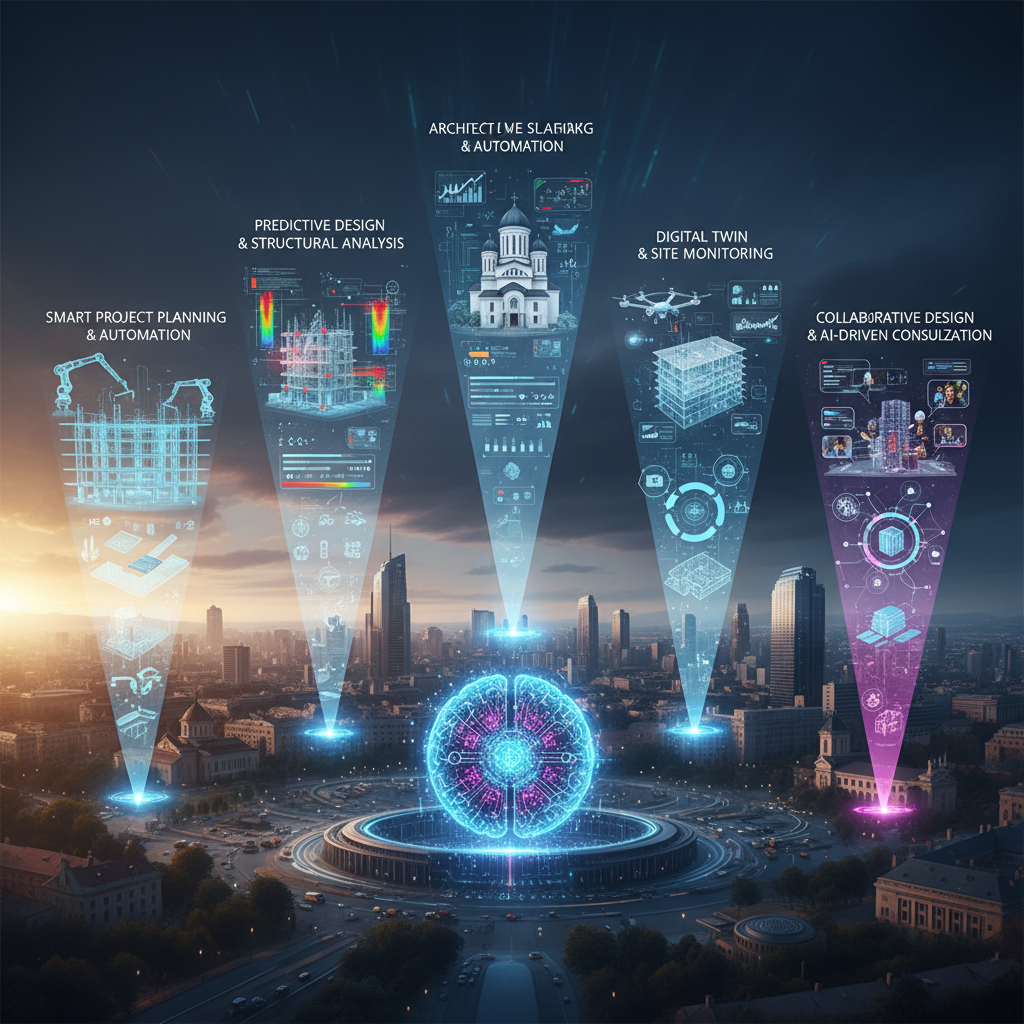
The digital revolution is rapidly reshaping industries worldwide, and Romania's construction and architecture sectors are no exception. While the nation isn't short on professional intelligence, effective coordination, consistent implementation, and a clear vision for digital transformation, especially regarding Artificial Intelligence (AI), are crucial. AI consulting offers a strategic pathway for Romanian firms to harness these technologies, optimize operations, and gain a competitive edge. This article outlines five essential AI consulting strategies tailored for the unique landscape of the Romanian construction and architecture industry.
1. Data-Driven Project Optimization and Predictive Analytics
The foundation of effective AI implementation lies in robust data. Romanian construction and architecture firms often generate vast amounts of data from project plans, budgets, material procurement, scheduling, and on-site operations. AI consulting can help establish frameworks for collecting, cleaning, and analyzing this data to identify patterns and predict future outcomes. For instance, predictive analytics can forecast project delays, cost overruns, or even potential structural issues before they arise. By leveraging historical data, AI algorithms can optimize resource allocation, identify potential risks, and streamline project workflows, leading to more efficient execution and improved profitability. Companies like Autodesk are already seeing solid growth in design and construction through new technologies, highlighting the importance of data-driven approaches.
2. Enhancing Design and Planning with Generative AI
Generative AI holds immense potential for the architectural design process. AI consulting can guide firms in integrating generative design tools that can explore countless design variations based on specified parameters, such as structural integrity, energy efficiency, material costs, and aesthetic preferences. This not only accelerates the design phase but also allows architects to explore innovative and sustainable solutions that might be overlooked through traditional methods. For example, AI can analyze building codes, site conditions, and material properties to generate optimized building layouts and structural designs, significantly reducing revision cycles and improving overall project quality.
3. Developing AI-Powered Safety and Risk Management Systems
Safety remains paramount in the construction industry. AI consulting can assist firms in implementing AI-powered solutions for enhanced safety and risk management. This involves utilizing computer vision to monitor construction sites for potential hazards, identify non-compliance with safety protocols, or even detect early signs of equipment malfunction. Furthermore, AI can analyze incident data to pinpoint root causes and develop preventative strategies, ultimately reducing accidents and improving worker well-being. The growing concern over cybersecurity, as highlighted by reports indicating a significant percentage of firms are ill-equipped to handle cyberattacks, underscores the need for robust AI-driven risk management not just on-site but also in data security.
4. Streamlining Supply Chain and Logistics with AI
The complexities of managing supply chains and logistics in construction can significantly impact project timelines and budgets. AI consulting can enable firms to deploy AI-driven solutions for optimizing material procurement, inventory management, and logistics planning. AI algorithms can analyze market trends, supplier performance, and transportation routes to identify the most cost-effective and efficient supply chain strategies. This can lead to significant reductions in waste, improved delivery times, and better overall project control. The ability to predict demand and manage inventory intelligently through AI can be a game-changer for large-scale construction projects.
5. Fostering Collaboration and Knowledge Sharing through AI Platforms
Effective collaboration among architects, engineers, contractors, and other stakeholders is crucial for project success. AI consulting can help integrate AI-powered collaborative platforms that facilitate seamless communication, knowledge sharing, and decision-making. These platforms can use AI to categorize and retrieve relevant project documentation, analyze team interactions to identify communication roadblocks, and even provide real-time recommendations based on project progress. By centralizing information and leveraging AI for intelligent insights, these platforms can significantly improve project coordination, a critical area where Romania acknowledges it needs to improve, as highlighted by discussions around the role of professional institutions in driving sustainability and effective implementation.
Conclusion
The integration of AI into the Romanian construction and architecture industry is not merely a technological upgrade but a strategic imperative. By embracing targeted AI consulting strategies, firms can unlock unprecedented levels of efficiency, innovation, and sustainability. From optimizing project workflows and enhancing design to bolstering safety and streamlining supply chains, AI offers powerful tools to address the industry's challenges and drive future growth. As the market continues to evolve, as evidenced by reports like SIOAR 2025, which analyzes the Romanian architecture and construction market, embracing AI will be key to staying competitive and building a more resilient future.
Sources:
- Digitalizarea în Construcții & Industrie - Agenda Constructiilor
- Interviul editiei iulie 2026: Romania nu duce lipsa de inteligenta profesionala, ci de coordonare, consecventa si capacitate de implementare... - Revista Constructiilor
- OAR publică Raportul SiOAR 2025 – O analiză a pieței de arhitectură și construcții din România - oar.archi
Frequently asked questions
How can AI consulting benefit Romanian construction firms?
AI consulting helps Romanian construction firms by optimizing operations, enhancing efficiency, and fostering innovation. It aids in data analysis, predictive analytics, risk management, and streamlined project workflows, leading to improved profitability and competitiveness.
What is generative AI's role in architectural design?
Generative AI helps explore numerous design variations based on parameters like structural integrity, energy efficiency, and material costs. It accelerates the design phase, allows for innovative solutions, and optimizes layouts and structural designs, reducing revision cycles.
How does AI improve safety in construction?
AI enhances construction safety by using computer vision to monitor sites for hazards and non-compliance. It analyzes incident data to identify root causes and develop preventative strategies, ultimately reducing accidents and improving worker well-being on-site.
Can AI streamline supply chains for construction projects?
Yes, AI can optimize supply chains by analyzing market trends, supplier performance, and transportation routes. This leads to more cost-effective material procurement, efficient inventory management, reduced waste, and improved delivery times for large-scale projects.
What are the five key AI strategies for Romanian firms?
The five strategies are data-driven project optimization, generative AI for design, AI-powered safety and risk management, streamlining supply chains with AI, and fostering collaboration through AI platforms. These aim to improve efficiency, innovation, and project coordination.
Why is AI integration crucial for Romanian construction?
AI integration is a strategic imperative for the Romanian construction and architecture industry. It unlocks unprecedented levels of efficiency, innovation, and sustainability, addressing industry challenges and driving future growth to ensure competitiveness in an evolving market.