AI Agents for Courier Companies: Managing Delivery Changes
AI agents empower Romanian courier companies to autonomously manage complex logistics tasks, such as handling real-time address changes and optimizing delivery windows, thereby significantly reducing manual operational costs and improving customer satisfaction through faster, more accurate service without direct human intervention.
An AI agent is a software system designed to observe its environment, make decisions, and take actions to achieve specific goals, often involving complex data processing and automated responses.
Why are traditional delivery management methods becoming obsolete?
Traditional delivery management relies heavily on manual intervention for handling changes. When a customer needs to change a delivery address or adjust a time slot, human operators typically manage these requests. This process is prone to delays and errors, especially as shipment volumes increase.
Such methods lead to inefficiencies, increased operational costs, and diminished customer satisfaction. The manual logging into multiple carrier systems to track shipments, as highlighted by a logistics case study, consumes significant human resources—potentially half a full-time job for dozens of daily shipments.
Furthermore, human operators can only process a limited number of requests simultaneously. This bottleneck becomes a critical issue in dynamic logistics environments where last-minute changes are frequent, impacting overall service quality and delivery success rates.
How can AI agents automate address and delivery window changes?
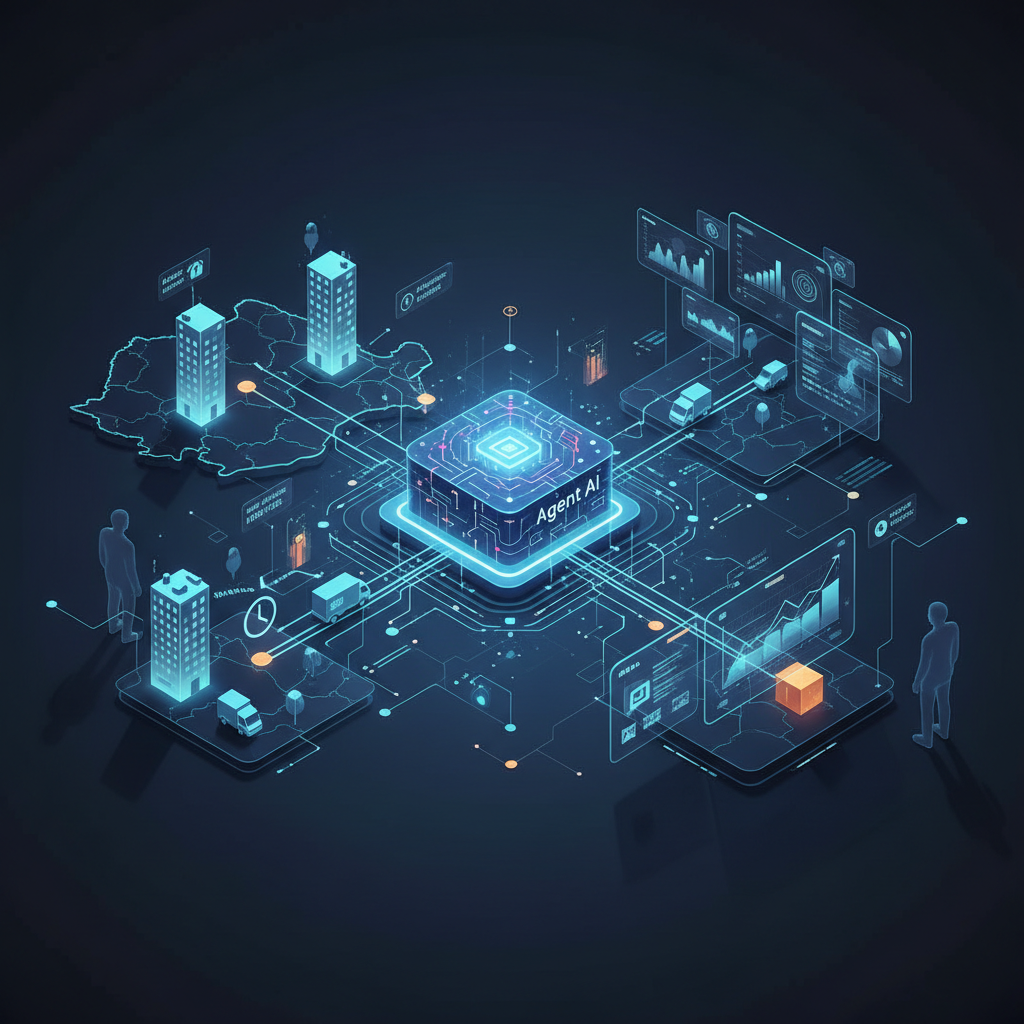
AI agents can fundamentally transform how courier companies in Romania handle dynamic delivery information. By integrating with existing logistics systems, these agents can process incoming requests for address changes or delivery window adjustments instantly.
Upon receiving a change request, an AI agent can verify the new details, assess the impact on current routes, and automatically re-optimize the delivery schedule. This occurs without requiring a human operator to manually input data or communicate with drivers.
This automation extends to proactively communicating with customers and drivers about updated schedules. For instance, if an AI detects a delay or a reroute, it can automatically send messages to all concerned parties, ensuring transparency and reducing customer inquiries.
What are the measurable benefits of implementing AI in logistics?
Implementing AI agents in logistics brings several quantifiable benefits. First, it leads to a significant reduction in manual labor for administrative tasks related to delivery management.
Companies can reallocate personnel from repetitive data entry and customer service inquiries to more strategic roles. One case study noted that automating delivery status updates alone saved what amounted to half a full-time position.
Second, AI improves delivery accuracy and speed. Automated route optimization, coupled with real-time adaptation to changes, can reduce delivery delays by up to 15-20%. This results in higher on-time delivery rates and improved customer satisfaction scores.
Third, cost savings are substantial. Beyond labor reduction, optimized routes mean less fuel consumption and vehicle wear. Overall operational cost reductions of 10-25% are achievable through comprehensive AI integration in logistics.
What are the key steps to deploying an AI agent for courier operations?
Deploying an AI agent for managing delivery changes involves a structured approach to ensure successful integration and optimal performance. Companies should start with a clear understanding of their specific pain points.
- Identify Core Challenges: Pinpoint the most frequent and costly manual tasks, such as the volume of address changes or re-scheduling requests. This defines the agent
Frequently asked questions
What is an AI agent in the context of courier services?
An AI agent in courier services is a software system designed to perform specific, often complex, tasks autonomously. This includes automating delivery status updates, managing dynamic routing based on real-time traffic, and handling customer requests for address or time changes without direct human input.
How can AI agents improve delivery efficiency for Romanian couriers?
AI agents enhance efficiency by automating repetitive tasks, such as processing address changes or re-scheduling deliveries. This reduces manual workload, minimizes human errors, and allows for quicker responses to dynamic situations, optimizing routes and ensuring timely deliveries even with last-minute adjustments.
What are the initial steps to implement an AI agent for delivery management?
Implementing an AI agent begins with defining specific problems to solve, such as handling address changes. This is followed by data collection, selecting suitable AI technologies, developing or integrating the agent, and rigorous testing within a controlled environment before full deployment. Starting with a pilot project is advisable.
How much does it cost to implement an AI agent for a courier company?
The cost of implementing an AI agent for a courier company in Romania can range from €15,000 for a basic, pre-built solution to over €100,000 for custom-developed, complex systems. This depends on factors like the scope of automation, required integrations, and the complexity of AI models, usually requiring a 3-6 month development timeline.
Can AI agents handle unexpected delivery exceptions effectively?
Yes, AI agents are designed to handle unexpected delivery exceptions by analyzing real-time data, identifying anomalies, and executing predefined or learned responses. For instance, if a delivery address is unreachable, an AI can automatically re-route, inform the recipient, and update the logistics team, minimizing disruption.