AI Consulting for Security Companies: Cost Reduction
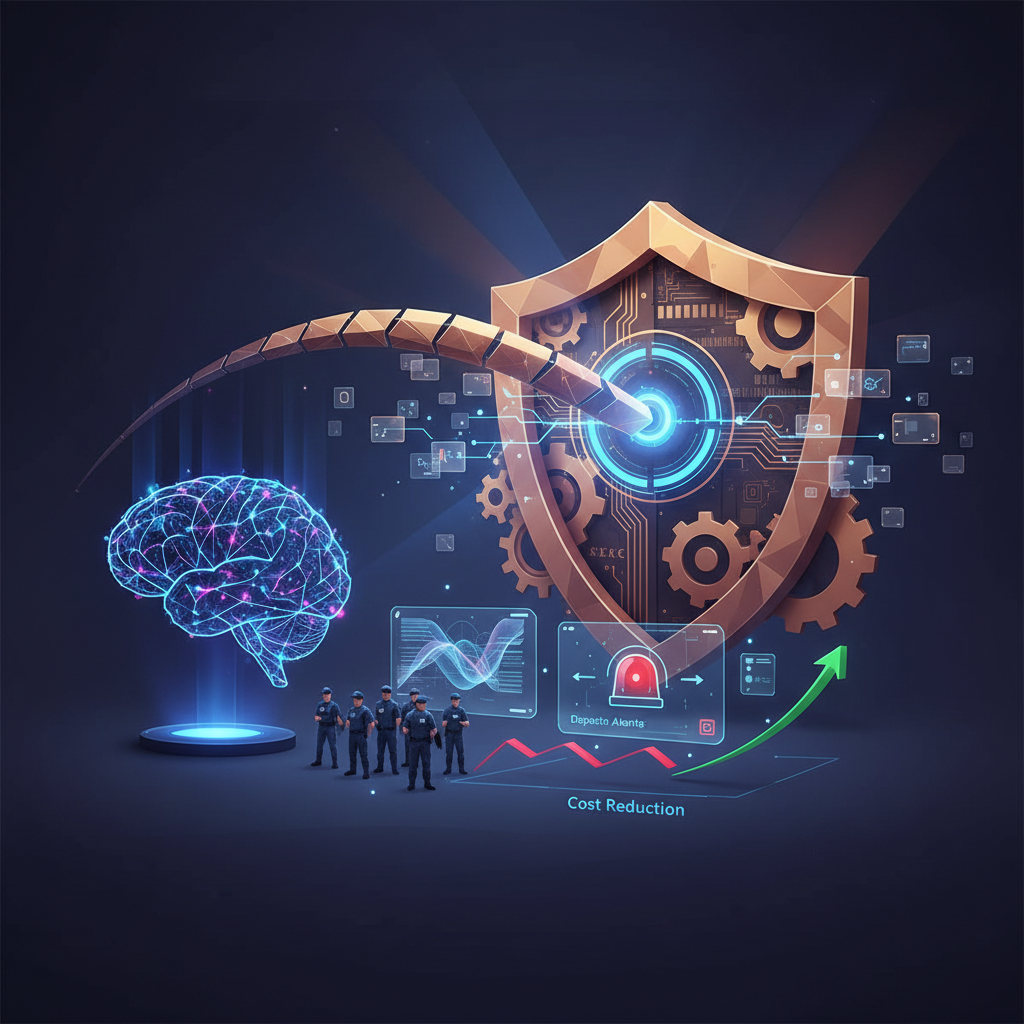
AI consulting fundamentally transforms security company operations by automating routine tasks such as shift reports and dispatch alerts, leading to significant cost reductions and improved efficiency. This strategic integration of AI helps mitigate human error, speeds up response times, and frees up personnel for more critical, value-adding activities, ultimately bolstering overall operational resilience and profitability.
Artificial Intelligence (AI) consulting for security companies involves providing expert guidance and implementation services to integrate AI technologies into security operations, aiming to optimize processes, enhance decision-making, and reduce costs.
Why should security companies adopt AI to reduce operational expenses?
Security companies face constant pressure to maintain high levels of service while controlling costs. Manual processes, such as writing detailed shift reports and managing numerous dispatch alerts, are labor-intensive and prone to human error. These inefficiencies directly impact operational budgets and can slow down critical response times. AI offers a pathway to address these challenges head-on.
Adopting AI allows for the automation of repetitive administrative tasks, which traditionally consume significant staff hours. By streamlining these functions, companies can reallocate personnel to more strategic roles, improving overall workforce productivity and reducing overtime expenses. This shift not only saves money but also enhances the quality and reliability of security services provided.
How does AI automate shift reports and dispatch alerts?
AI automates shift reports by leveraging natural language processing (NLP) and machine learning algorithms. Security personnel can use voice-to-text inputs or structured digital forms, with AI then organizing and summarizing key incidents, observations, and patrol details into comprehensive reports. This process drastically cuts down the time spent on manual data entry and report generation.
For dispatch alerts, AI systems can integrate with various sensors, cameras, and monitoring platforms. They analyze incoming data in real-time, identify anomalies or critical events, and automatically generate and prioritize alerts. These alerts are then routed to the appropriate personnel or dispatch centers through predefined protocols, ensuring rapid and accurate responses without manual intervention.
What are the tangible cost savings from AI automation?
Implementing AI solutions for automating shift reports and dispatch alerts can lead to substantial cost savings. Companies can expect to reduce administrative overhead by an estimated 20-40% through increased efficiency and reduced need for manual data processing. This includes savings on labor costs associated with report writing, review, and alert management.
Beyond direct labor savings, AI helps minimize costs related to human error, such as incorrect data entries or missed critical alerts, which can lead to financial penalties or operational disruptions. Improved accuracy in reporting and faster alert processing can also reduce liability and insurance costs. Typically, a mid-sized security firm might see a return on investment (ROI) within 12-24 months of deploying such AI systems, depending on the complexity and scope of the implementation.
What steps are involved in implementing AI for security operations?
Implementing AI into security operations requires a structured approach to ensure successful integration and maximize benefits. Companies should begin with a clear assessment of their current processes and identify specific pain points suitable for AI intervention.
Here are key steps for effective AI implementation:
- Define clear objectives: Clearly outline what problems AI should solve and what specific operational improvements are expected (e.g., reducing report generation time by 30%, decreasing false alarms by 15%).
- Conduct a process audit: Analyze existing shift reporting and dispatch workflows to pinpoint bottlenecks and manual touchpoints that can be automated.
- Select appropriate AI solutions: This might involve custom AI models tailored to specific operational footage and risk patterns, or off-the-shelf automation platforms designed for security.
- Integrate with existing systems: Ensure the new AI tools seamlessly connect with alarm panels, monitoring software, and existing business management platforms.
- Train personnel: Provide comprehensive training for security staff on how to use new AI-powered tools for reporting and alert management.
- Pilot and scale: Start with a pilot program in a controlled environment, collect feedback, refine the system, and then gradually scale across the entire operation.
- Monitor and optimize: Continuously track performance metrics, evaluate the AI system
Frequently asked questions
How can AI help security companies reduce operational costs?
AI reduces operational costs for security companies by automating manual, repetitive tasks such as generating shift reports and managing dispatch alerts. This minimizes human error, improves efficiency, and allows security personnel to focus on higher-value activities, leading to tangible savings and enhanced service delivery.
What is AI consulting for security companies?
AI consulting for security companies involves expert guidance on integrating artificial intelligence technologies into their operations. This includes identifying automation opportunities, developing custom AI models, and implementing solutions for tasks like reporting, dispatch, and compliance tracking, tailored to industry-specific needs.
What are the benefits of automating shift reports with AI?
Automating shift reports with AI streamlines administrative burdens, ensures consistent data capture, and reduces the time spent on manual documentation. This leads to quicker report generation, improved data accuracy, and faster information dissemination, enhancing real-time situational awareness and operational efficiency.
How does AI improve dispatch alert systems?
AI improves dispatch alert systems by analyzing data to prioritize and route alerts more effectively, reducing false positives, and ensuring critical information reaches the right personnel promptly. This accelerates response times, optimizes resource allocation, and enhances the overall effectiveness of emergency protocols.
What specific AI solutions are available for security operations?
AI solutions for security operations include custom AI models trained on specific footage and risk patterns, automated logging and reporting, intelligent quoting, administrative automation for tasks like payroll, and integrated systems for alarm panels and monitoring platforms.