AI in Romanian SMEs: Automating Abusive Clause Analysis in Supplier Contracts
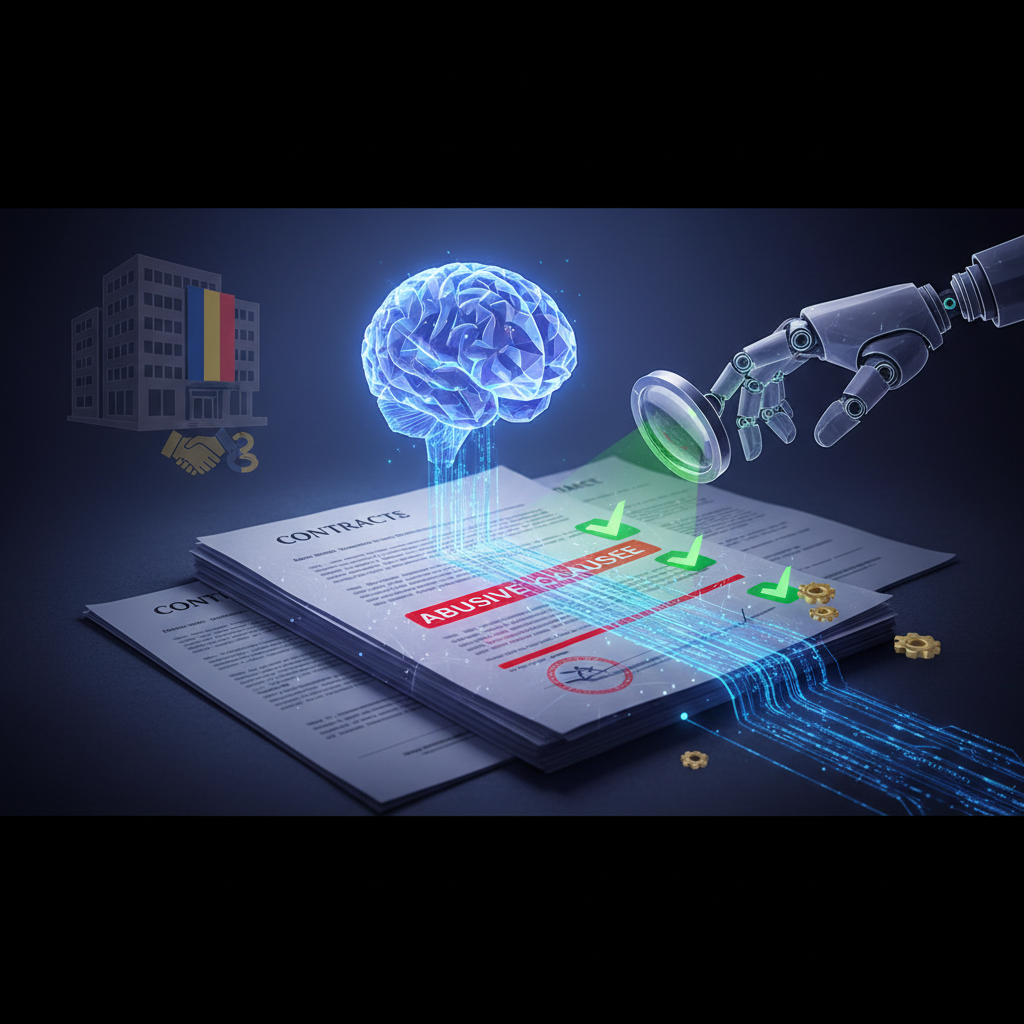
The digital transformation is reshaping various sectors, and the legal field is no exception. For Romanian Small and Medium-sized Enterprises (SMEs), integrating Artificial Intelligence (AI) into legal departments offers a compelling opportunity to enhance efficiency, reduce risks, and ensure compliance, especially when it comes to navigating complex supplier contracts. One of the most impactful applications of AI in this context is the automation of identifying abusive clauses.
The Challenge of Abusive Clauses in Supplier Contracts
Supplier contracts are the backbone of many business operations. However, they often contain intricate legal language, and identifying potentially abusive or unfavorable clauses can be a time-consuming and resource-intensive task for human legal professionals. For SMEs with limited legal resources, this challenge is even more pronounced. Such clauses can lead to significant financial losses, operational disruptions, or legal disputes if left undetected.
Traditionally, legal teams manually review each contract, a process prone to human error and inconsistency, especially when dealing with a high volume of documents. This manual approach not only consumes valuable time but also diverts legal talent from more strategic tasks.
How AI Transforms Abusive Clause Analysis
AI-powered legal tech solutions are designed to automate and optimize this critical function. Here’s how AI can be a game-changer for Romanian SMEs:
-
Automated Document Review: AI can rapidly process and analyze vast quantities of legal documents, including supplier contracts, at a speed and scale impossible for human reviewers. This significantly reduces the time spent on initial contract review.
-
Pattern Recognition and Anomaly Detection: Advanced AI algorithms, particularly those leveraging machine learning and natural language processing (NLP), can be trained to identify specific patterns, keywords, and phrases indicative of abusive, unfair, or non-compliant clauses. This goes beyond simple keyword searches, as AI can understand the context and implications of different contractual provisions.
-
Enhanced Accuracy and Consistency: By standardizing the review process, AI minimizes human error and ensures a consistent approach to identifying problematic clauses across all contracts. This uniformity is crucial for maintaining legal compliance and mitigating risks.
-
Risk Categorization and Prioritization: AI tools can not only flag problematic clauses but also categorize them based on their severity and potential impact. This allows legal teams to prioritize their efforts, focusing on the highest-risk areas first.
-
Cost Efficiency: Automating the initial stages of contract review can lead to substantial cost savings by reducing the need for extensive manual labor and allowing legal professionals to dedicate their expertise to more complex legal analysis and strategic decision-making.
Beyond Identification: The Strategic Advantage
The benefits of AI in contract analysis extend beyond merely identifying problematic clauses. It provides a strategic advantage by:
-
Facilitating Proactive Risk Management: By quickly identifying potential issues, SMEs can proactively negotiate better terms with suppliers, amend existing contracts, or seek legal counsel before problems escalate.
-
Improving Negotiation Power: Armed with comprehensive insights into contract terms, SMEs can enter negotiations with a stronger position, leading to more favorable agreements.
-
Ensuring Regulatory Compliance: AI can help ensure that supplier contracts adhere to local and international legal standards, reducing the risk of regulatory penalties.
-
Freeing Up Legal Professionals: By automating routine and repetitive tasks, AI allows legal professionals to focus on more complex legal analysis, strategic advice, and fostering stronger client relationships, thereby maximizing their value to the organization.
Implementation Considerations for Romanian SMEs
While the advantages are clear, implementing AI in a legal department requires careful consideration:
-
Data Quality: The effectiveness of AI models heavily relies on the quality and quantity of the training data. For contract analysis, this means feeding the AI with a diverse and representative dataset of contracts, both compliant and those containing abusive clauses.
-
Human-in-the-Loop (HiL): Even with advanced AI, human oversight remains crucial. Legal professionals should review the AI's findings, especially in high-stakes situations, to ensure accuracy and to provide the nuanced judgment that only human intelligence can offer. This "Human-in-the-Loop" approach is advocated in international regulatory models for high-risk AI systems.
-
Explainability (XAI): Understanding why an AI flagged a particular clause is as important as the flag itself. The evolution towards "Justified AI" (JAI) standards emphasizes inherent interpretability, ensuring that the AI's decisions are transparent and legally sound, addressing concerns like algorithmic bias and opacity.
-
Integration with Existing Systems: Seamless integration of AI tools with existing legal and business systems is vital for efficient workflow and data exchange.
The Future of Legal Departments in Romanian SMEs
The adoption of AI in legal departments is not about replacing human lawyers but augmenting their capabilities. For Romanian SMEs, embracing AI for tasks like abusive clause analysis in supplier contracts presents a significant opportunity to modernize their legal operations, gain a competitive edge, and navigate the complexities of the business landscape with greater confidence and efficiency. As the legal tech landscape evolves, those who leverage these tools will be better positioned to manage risk, ensure compliance, and drive sustainable growth.
Sources
- The impact of AI on the provision of legal services in Romania (https://www.iflr.com/article/2gm0prokhcehxa5sdnzeo/sponsored/the-impact-of-ai-on-the-provision-of-legal-services-in-romania)
- AI IN CROSS-BORDER PROCUREMENT: LAW AND ETHICS (https://univagora.ro/jour/index.php/aijjs/article/view/7666)
- Business | LuxuryOnline (https://www.luxuryonline.ro/category/exclusive/business/)
Frequently asked questions
How can AI help Romanian SMEs with supplier contracts?
AI can help Romanian SMEs by automating the identification of abusive clauses in supplier contracts. It rapidly processes documents, recognizes patterns indicative of problematic clauses, and prioritizes risks, significantly enhancing efficiency and compliance in legal departments.
What are the benefits of using AI for contract review?
Benefits include automated document review, enhanced accuracy through pattern recognition, consistent identification of problematic clauses, and risk prioritization. This leads to cost efficiency, stronger negotiation power, proactive risk management, and improved regulatory compliance for SMEs.
What is the role of human-in-the-loop (HiL) in AI contract analysis?
Human-in-the-loop (HiL) ensures human oversight remains crucial. Legal professionals review AI findings, especially in high-stakes situations, providing accuracy and nuanced judgment. This approach is advocated for high-risk AI systems to ensure reliability.
Why is data quality important for AI in legal departments?
Data quality is critical because the effectiveness of AI models relies on the training data. For contract analysis, AI needs a diverse and representative dataset of both compliant and abusive contracts to accurately identify problematic clauses and perform reliably.
How does AI provide a strategic advantage for SMEs in contract management?
AI provides a strategic advantage by facilitating proactive risk management, improving negotiation power through comprehensive insights, and ensuring regulatory compliance. It also frees up legal professionals to focus on more complex analysis and strategic decision-making, maximizing their value.