
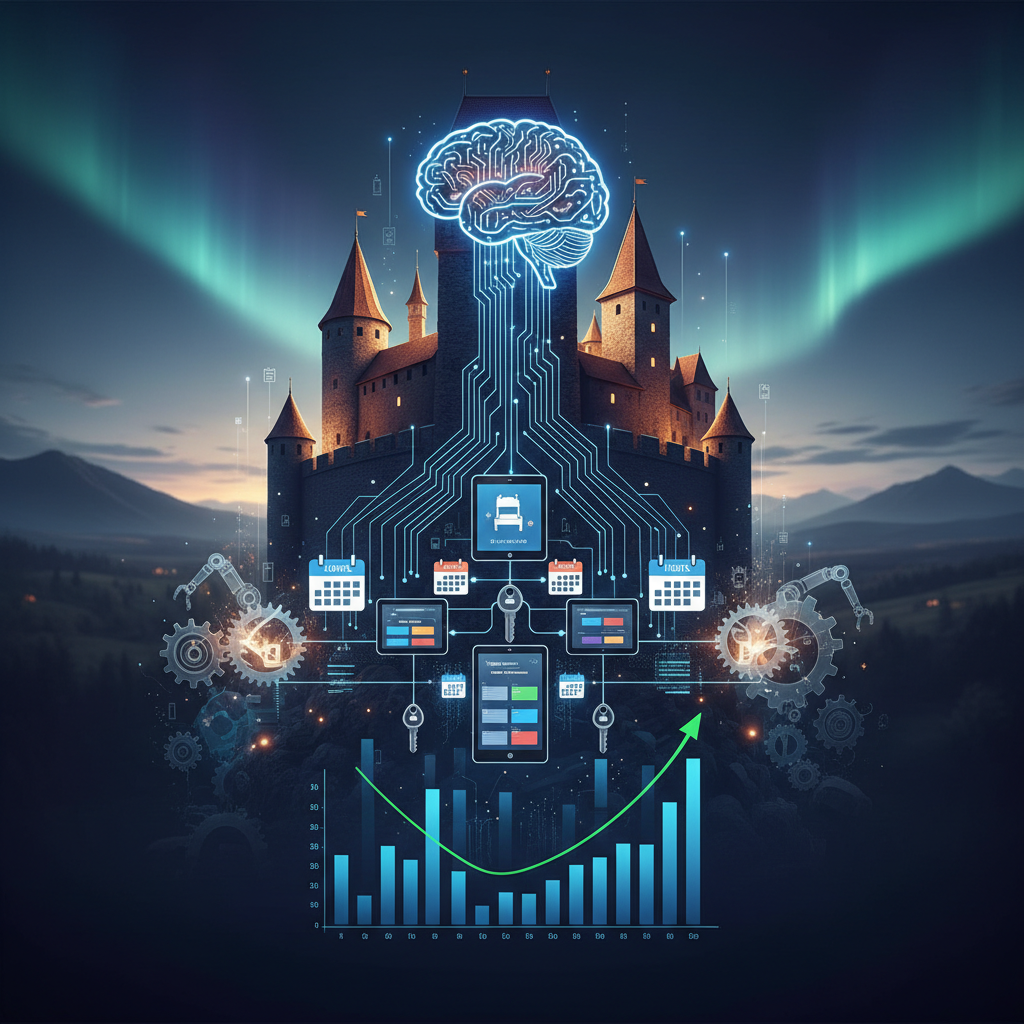
AI in Transylvanian Hospitality: Automating Multi-Reservations for Cost Efficiency
The captivating landscapes and rich history of Transylvania have long drawn travelers from across the globe. As the region's hospitality industry continues to flourish, hoteliers face the constant challenge of optimizing operations and managing costs while upholding the unique charm that defines a Transylvanian getaway. Enter Artificial Intelligence, a powerful ally in this pursuit, particularly in the realm of reservation management.
The Rising Tide of AI in Hospitality
Operational automation is no longer a futuristic concept; it's a present-day reality rapidly transforming various facets of the hospitality sector. From customer service interactions to check-in/out processes, housekeeping logistics, and internal communications, AI-powered solutions are proving their worth. The core appeal lies in their ability to handle repetitive and time-consuming tasks with remarkable speed and accuracy, freeing up human staff to focus on more complex, guest-facing responsibilities that truly enhance the stay.
For independent hotels in Transylvania, the drive to adopt AI isn't solely about trimming labor costs. It's also about a delicate balancing act: how to leverage efficiency gains without inadvertently eroding the distinctive value proposition that sets a hotel apart. The essence of Transylvanian hospitality often lies in personalized attention and a warm, inviting atmosphere. The key is to strategically deploy AI where it augments, rather than detracts from, this experience.
Automating Multi-Reservations: A Game Changer
One of the most significant areas where AI can deliver substantial cost savings and operational improvements is in the automated management of multiple reservations. The traditional process of handling bookings, especially when dealing with group reservations, last-minute changes, or complex itineraries, can be a labyrinth of manual entries, cross-referencing, and potential human error. This is where AI truly shines.
How AI Streamlines Reservation Management:
- Centralized Booking Systems: AI can integrate various booking channels – online travel agencies (OTAs), direct website bookings, phone reservations – into a unified platform. This eliminates the need for manual data transfer and reduces the risk of overbooking or miscommunication.
- Predictive Analytics for Demand Forecasting: Advanced AI algorithms can analyze historical data, seasonal trends, local events, and even real-time market conditions to predict future demand with higher accuracy. This allows hotels to optimize pricing strategies, allocate resources effectively, and proactively manage staffing levels.
- Automated Communication: AI-powered chatbots and communication tools can handle initial reservation inquiries, send confirmation emails, provide pre-arrival information, and even address frequently asked questions. This reduces the burden on front desk staff and ensures guests receive timely and consistent information.
- Dynamic Room Allocation: For hotels managing multiple room types and varying guest preferences, AI can dynamically allocate rooms based on availability, guest requests, and even predicted guest behavior. This maximizes occupancy rates and improves guest satisfaction.
- Conflict Resolution and Optimization: In scenarios involving overbookings or unexpected cancellations, AI systems can rapidly identify alternative solutions, reallocate rooms, and notify relevant parties, minimizing disruption and ensuring a smooth guest experience.
The Balance Between Efficiency and Experience
The real challenge for Transylvanian hoteliers, as indeed for any hotelier, is identifying which processes are ripe for digitalization and where human touch remains paramount. While AI can flawlessly manage the mechanics of reservations, the warmth of a human welcome, the personalized recommendation for a local delicacy, or the empathetic resolution of a unique guest concern are aspects that currently remain the domain of human interaction.
AI should be viewed as a tool that enhances human capabilities, not replaces them entirely. By automating the mundane, AI empowers hotel staff to dedicate more time to creating memorable guest experiences. Imagine front desk personnel, no longer bogged down by administrative tasks, having more time to engage with guests, offer tailored recommendations, and build genuine connections. This is where AI truly contributes to preserving and even elevating the differential value of the hospitality industry.
The Future of Transylvanian Hospitality with AI
The future of hospitality in Transylvania, much like the industry globally, will undoubtedly be shaped by the intelligent integration of AI. By strategically deploying AI in areas like multi-reservation management, hotels can achieve significant cost reductions, improve operational efficiency, and ultimately enhance the overall guest journey. The key to success lies in a thoughtful approach, where technology serves to amplify the inherent hospitality and unique character that makes Transylvania such a cherished destination.
Sources
- TIS Global Summit: "AI in operations: reducing costs without destroying the hotel experience"
Frequently asked questions
How does AI help hotels manage multiple reservations?
AI integrates booking channels, uses predictive analytics for demand, automates guest communication, dynamically allocates rooms, and resolves conflicts. This streamlines complex booking processes, reduces manual errors, and optimizes resource management for hotels.
Can AI reduce costs in Transylvanian hospitality?
Yes, AI can significantly reduce costs by automating time-consuming tasks like reservation management. This frees up staff, optimizes resource allocation, and minimizes errors, contributing to greater operational efficiency and cost savings for hotels.
Does AI replace human interaction in hotels?
No, AI is designed to enhance human capabilities, not replace them. By automating mundane tasks, AI allows hotel staff to dedicate more time to personalized guest interactions, building connections, and delivering memorable experiences.
What are the benefits of AI for guest experience in hotels?
AI improves guest experience by ensuring timely communication, efficient room allocation, and smoother booking processes. By handling administrative tasks, AI empowers human staff to offer more personalized attention and recommendations, enhancing the overall stay.
How does AI use predictive analytics in hospitality?
AI uses predictive analytics to forecast demand by analyzing historical data, seasonal trends, local events, and market conditions. This helps hotels optimize pricing, staffing, and resource allocation, improving operational planning and profitability.
Is AI adoption common in Transylvanian hotels?
The article indicates that Transylvania's hospitality sector is embracing AI to streamline operations. While adoption is growing, the focus is on strategic deployment to balance efficiency gains with preserving the region's unique hospitality charm.