AI-Powered Lead Funnels: The Future of Service Business Growth
The AI Revolution in Lead Generation for Service Businesses
In today's fiercely competitive landscape, service businesses are constantly seeking innovative ways to attract and convert leads. The traditional sales funnel, while foundational, often struggles with inefficiencies and the sheer volume of manual tasks. This is where Artificial Intelligence (AI) steps in, offering a transformative approach to lead generation that can automate processes, personalize interactions, and significantly boost conversion rates.
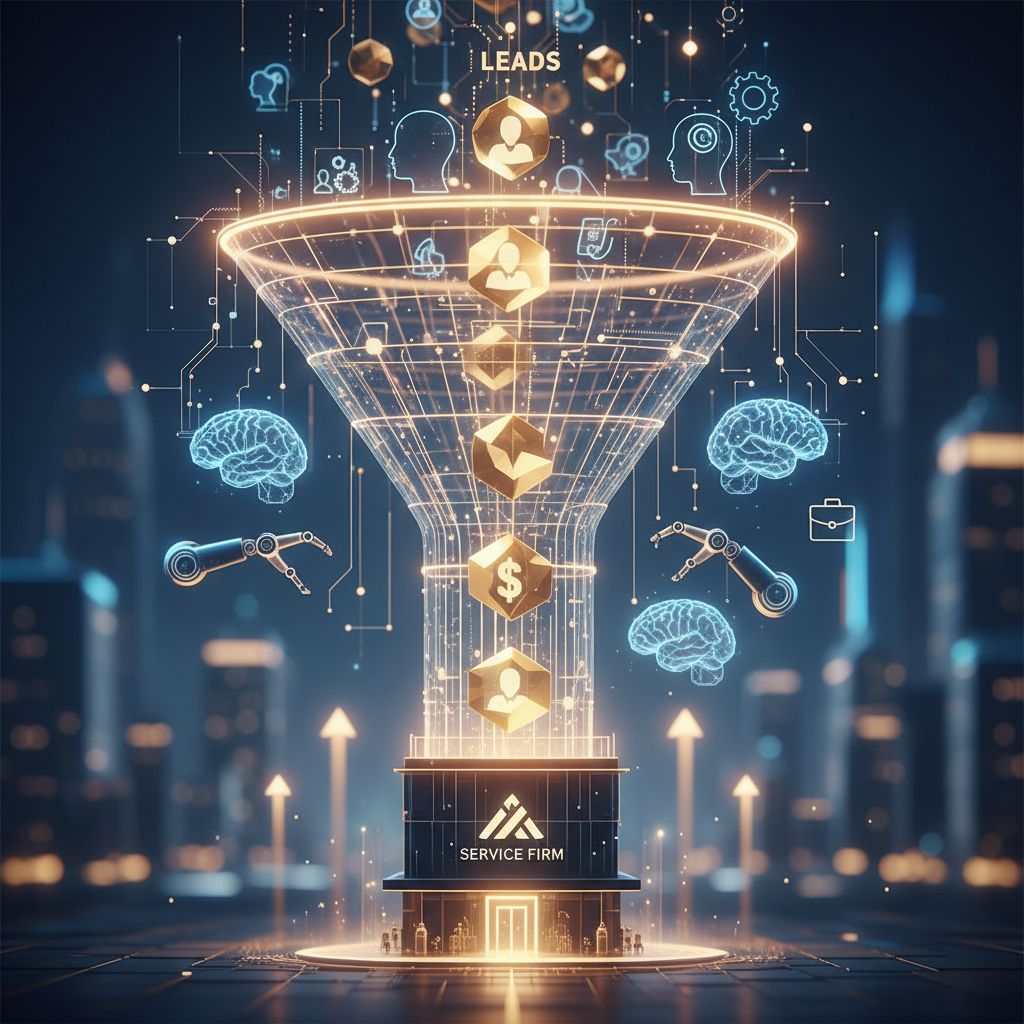
An AI-powered lead funnel is more than just an automated sales process; it's a sophisticated system designed to guide potential clients from their very first interaction with your brand to becoming loyal customers. By integrating AI, businesses can optimize their resources, reduce the time it takes to close a sale, and dramatically improve the overall customer experience.
The Anatomy of an AI-Driven Lead Funnel
Building an effective AI-powered lead funnel involves several critical stages, each enhanced by intelligent automation and data analysis.
1. Defining Clear Objectives and Target Audience
Before diving into the technicalities, it's crucial to define what you aim to achieve with your funnel. Is it to increase the number of qualified leads, improve conversion rates, or boost the average order value? Clear objectives will guide every decision you make. Simultaneously, a deep understanding of your target audience is paramount. AI tools can help analyze customer data, create detailed buyer personas, and segment your audience with unprecedented precision, ensuring your marketing efforts are targeted and relevant.
2. Awareness: AI-Enhanced Attraction
At the top of the funnel, the goal is to attract potential clients. AI can supercharge this phase by:
- Content Creation and Optimization: AI-powered tools can assist in generating blog posts, social media updates, and ad copy, while also analyzing content performance to identify what resonates best with your audience. This ensures a steady stream of informative and attractive content.
- Personalized Advertising: AI algorithms can analyze user behavior and preferences to deliver highly targeted advertisements across various platforms, ensuring your message reaches the right people at the right time.
- Chatbots and Virtual Assistants: Implement AI-driven chatbots on your website and social media to engage visitors, answer common questions, and qualify leads round-the-clock, providing instant gratification and moving them further down the funnel.
3. Interest: Nurturing with Intelligence
Once aware, leads need to be nurtured. This is where AI excels at sustained engagement:
- Dynamic Email Marketing: AI can segment your email lists based on engagement levels, past interactions, and expressed interests, allowing for hyper-personalized email campaigns. This means sending the right content, offers, and follow-ups at optimal times.
- Intelligent Lead Scoring: AI models can analyze various data points (website visits, content downloads, email opens) to score leads based on their likelihood to convert. This helps your sales team prioritize hot leads and focus their efforts where they're most effective.
- Predictive Analytics: AI can predict future customer behavior, helping you anticipate needs and proactively offer solutions, further deepening engagement.
4. Decision: Streamlining Conversion
The decision phase is about converting interested leads into paying customers. AI can smooth this crucial step:
- Personalized Offerings: Based on collected data, AI can help tailor product or service recommendations and special offers, increasing their appeal.
- Automated Scheduling and Appointment Setting: For service businesses, booking consultations or demos is key. AI-powered tools can automate this process, seamlessly integrating with calendars and sending reminders.
- CRM Integration: AI can integrate with Customer Relationship Management (CRM) systems to automate data entry, update lead statuses, and provide sales teams with comprehensive insights into each lead's journey.
5. Action: Post-Conversion Engagement
The funnel doesn't end with a sale. AI can enhance post-conversion activities to foster loyalty and repeat business:
- Automated Onboarding: AI can guide new clients through onboarding processes, providing relevant resources and support.
- Customer Support Chatbots: Continue to offer instant support, resolving simple queries and freeing up human agents for more complex issues.
- Feedback Collection and Analysis: AI can analyze customer feedback to identify areas for improvement in services or the overall customer experience.
Scaling Your AI-Powered Lead Funnel Responsibly
Scaling lead generation campaigns with AI requires a strategic approach. Simply throwing more budget at it won't guarantee better quality leads. Healthy scaling is about control and understanding what truly works.
- Validate and Stabilize: Before scaling, ensure your offer and conversion sources are validated, and your cost per lead is stable at a minimum relevant volume.
- Filter and Qualify: AI is instrumental in filtering out weak leads early in the funnel, ensuring your sales team focuses on high-potential prospects.
- Gradual Budget Increase and Expansion: Increase your budget gradually and expand cautiously to new audiences, angles, and channels, always monitoring performance.
- Beyond CPL: While Cost Per Lead (CPL) is important, track the entire journey to revenue, including appointments, contact rates, opportunities, and actual sales. This holistic view prevents incomplete decision-making and ensures profitable growth.
Embracing the AI Advantage
For service businesses, AI is no longer a luxury but a necessity for building robust and efficient lead generation funnels. By embracing AI, businesses can not only attract and convert more leads but also build stronger, more personalized relationships with their clients, paving the way for sustainable growth in the digital age.
Sources
- Afaceri 365, "Cum să construiești un funnel de vânzări automatizat."
- Lead Generation, "Cum scalezi campanii lead generation."
Frequently asked questions
How can AI enhance lead generation for service businesses?
AI enhances lead generation by automating processes, personalizing interactions, and boosting conversion rates. It helps define target audiences, create optimized content, deliver personalized ads, nurture leads with intelligent scoring and dynamic email, streamline conversions, and improve post-sale engagement, ultimately driving significant growth.
What are the key stages of an AI-driven lead funnel?
An AI-driven lead funnel involves defining objectives and target audience, awareness (AI-enhanced attraction), interest (intelligent nurturing), decision (streamlining conversion), and action (post-conversion engagement). Each stage uses AI tools for automation, personalization, and data analysis to optimize the customer journey.
How does AI help in nurturing leads?
AI nurtures leads by enabling dynamic email marketing for hyper-personalized campaigns based on engagement and interests. It also uses intelligent lead scoring to prioritize hot leads and applies predictive analytics to anticipate customer needs, ensuring sustained and effective engagement.
Can AI improve post-conversion engagement for businesses?
Yes, AI improves post-conversion engagement by automating onboarding processes, providing instant customer support via chatbots, and analyzing feedback to identify areas for service improvement. This fosters loyalty and repeat business by ensuring continuous support and enhancing the overall customer experience.
What should be considered when scaling AI-powered lead funnels?
When scaling AI-powered lead funnels, it's crucial to validate offers, stabilize costs per lead, and ensure the funnel effectively filters out weak leads. Gradual budget increases and cautious expansion to new audiences are recommended, focusing on tracking the entire journey to revenue, not just CPL.