
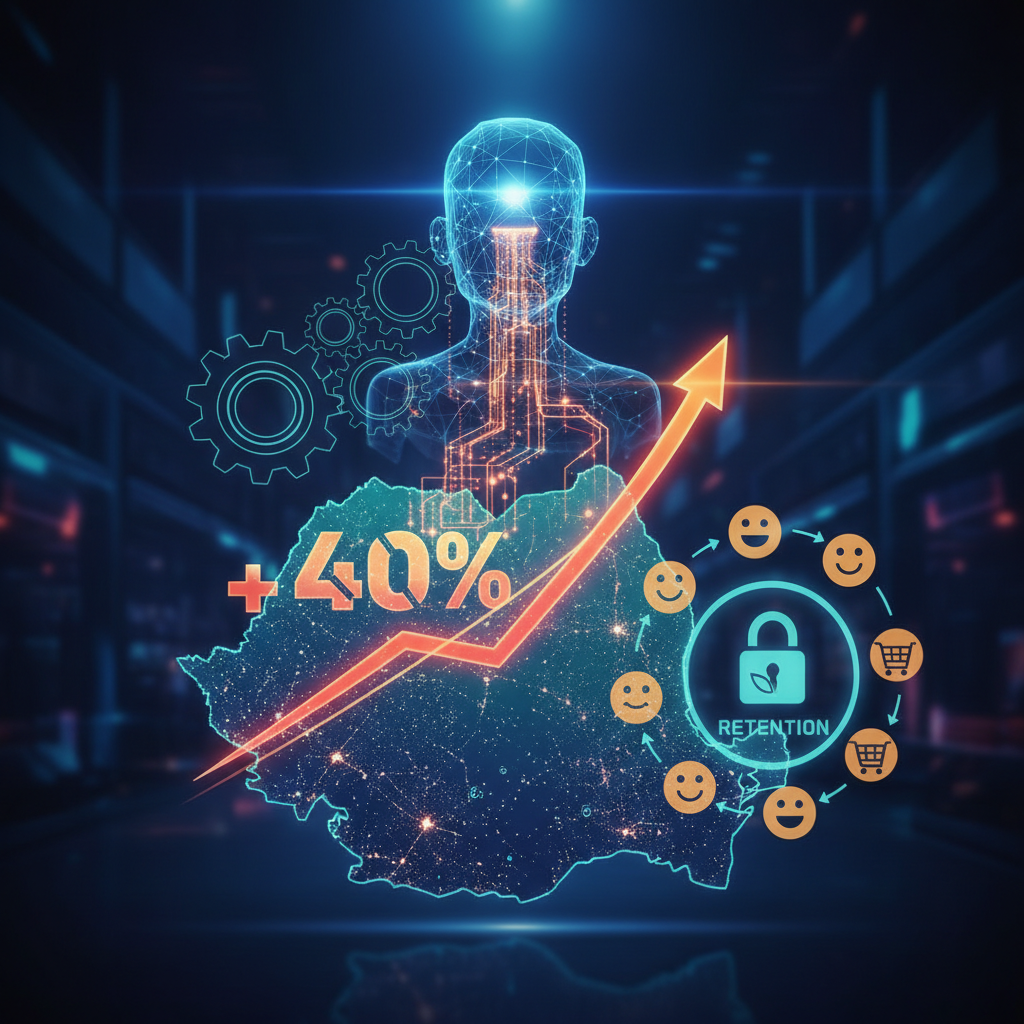
Boosting Customer Retention by 40% with AI-Powered Post-Sale Feedback Automation in Romania
The landscape of customer service is undergoing a profound transformation, with Artificial Intelligence at its core. In Romania, businesses are increasingly leveraging AI to not only streamline operations but also to significantly enhance customer retention, with some witnessing increases of up to 40% through automated post-sale feedback mechanisms. This isn't just an incremental change; it's an architectural shift in how companies interact with their customers and build lasting relationships.
The Evolution of AI in Customer Service: Beyond Chatbots
For many years, the mention of AI in customer service conjured images of rudimentary, rule-based chatbots that often led to frustration. These early iterations were limited to scripted FAQs and struggled with anything beyond a predefined path. However, that era is firmly in the past. The current generation of AI customer service systems, powered by large language models and advanced agentic frameworks, represents a monumental leap forward.
Unlike their predecessors, today's AI agents are equipped with the ability to understand context, navigate nuanced conversations, access real-time data from disparate systems simultaneously, and resolve complex, multi-step requests without human intervention. This advanced capability means that AI is no longer just deflecting simple queries but is actively resolving problems, leading to a much more satisfying customer experience.
The Shift Towards Autonomous Resolution and Cost Reduction
According to Salesforce's 2026 State of Service research, a staggering 66% of service teams now utilize AI agents, a significant jump from 39% just a year prior. What's more, 70% of these teams reported measurable value within 60 days of deployment. This rapid adoption underscores the tangible benefits AI brings to customer service operations.
Gartner's projections further highlight the transformative potential, forecasting that by 2029, agentic AI will autonomously resolve 80% of common customer service issues. This will lead to a substantial 30% reduction in operational costs. The gap is widening between companies embracing this intelligent automation and those still relying on outdated chatbot solutions. Businesses that integrate AI effectively are not just staying competitive; they are redefining what's possible in customer engagement.
AI in Romania: A Growing Acceptance and Impact
Romania is demonstrating a strong appetite for AI adoption in the workplace. A recent survey revealed that over a third of Romanian employees (35%) use AI at least once a week, surpassing the European average of 29%. This widespread adoption is attributed to the perceived efficiency gains, with 70% of Romanian AI users reporting that AI helps them work more efficiently. This positive sentiment extends to managers, with 41% stating they are using AI more frequently.
The increasing comfort and reliance on AI among Romanian professionals create a fertile ground for implementing advanced AI solutions, particularly in critical areas like post-sale feedback. Businesses are recognizing that by automating and intelligently processing customer feedback, they can gain invaluable insights into customer satisfaction, identify pain points, and proactively address issues that could lead to churn.
How AI Elevates Post-Sale Feedback for Retention
Automating post-sale feedback with AI agents goes far beyond simply collecting data. These intelligent systems can:
- Analyze sentiment in real-time: AI can quickly process vast amounts of unstructured feedback (comments, reviews, call transcripts) to gauge customer sentiment and identify emerging trends.
- Personalize follow-ups: Based on individual feedback, AI can trigger personalized follow-up actions, such as offering solutions, escalating complex issues to human agents, or suggesting relevant products/services.
- Predict churn risks: By identifying patterns in negative feedback or changes in customer behavior, AI can flag customers at risk of churn, allowing businesses to intervene proactively.
- Optimize product and service offerings: Aggregated and analyzed feedback provides a clear roadmap for improving products and services, directly addressing customer needs and increasing satisfaction.
- Reduce response times: AI can automate initial responses to feedback, ensuring customers feel heard and valued, even outside of business hours.
The ability of AI to seamlessly integrate with CRM, order management, and knowledge base systems allows for a holistic understanding of each customer's journey. This integrated approach ensures that feedback isn't siloed but actively contributes to a continuous improvement cycle that directly impacts customer loyalty and, ultimately, retention rates.
The Path Forward for Romanian Businesses
The opportunity for Romanian businesses to leverage AI for enhanced customer retention through automated post-sale feedback is immense. As AI technology continues to mature, its capacity to deliver personalized, efficient, and impactful customer interactions will only grow.
For companies looking to implement such solutions, the key lies in understanding the shift from rule-based chatbots to reasoning-based AI agents. Investing in systems that can process context, integrate data, and generate genuinely useful responses will be paramount. With 7 out of 10 Romanian AI users already experiencing increased efficiency, the groundwork for widespread adoption and success is already in place. The time is now for Romanian firms to embrace this revolution and unlock unprecedented levels of customer loyalty.
Sources
- Tommaso Maria Ricci. "AI for Customer Service: 2026 Costs, ROI and Rollout Plan." (https://www.tommasomariaricci.com/blog/ai-for-customer-service-guide-2026)
- Master of Code Global. "AI in Customer Service Statistics [2026]." (https://masterofcode.com/blog/ai-in-customer-service-statistics)
- Romania Journal. "Seven out of ten Romanian AI users say AI helps them work more efficiently." (https://www.romaniajournal.ro/business/seven-out-of-ten-romanian-ai-users-say-ai-helps-them-work-more-efficiently/)
Frequently asked questions
How are AI agents transforming customer service in Romania?
AI agents in Romania are moving beyond basic chatbots to understand context, access real-time data, and resolve complex issues autonomously. This architectural shift in customer service leads to more satisfying customer experiences and helps businesses build lasting relationships, driving higher retention.
What is the impact of AI on customer retention in Romania?
In Romania, businesses leveraging AI-powered post-sale feedback mechanisms are experiencing significant improvements in customer retention, with some reporting increases of up to 40%. AI helps by analyzing sentiment, personalizing follow-ups, and predicting churn risks, thereby improving customer loyalty.
What is the difference between old chatbots and modern AI agents?
Old chatbots were limited to scripted FAQs and struggled with nuance. Modern AI agents, powered by large language models, understand context, integrate data from disparate systems, and can autonomously resolve complex, multi-step requests, offering a superior customer experience.
How does AI analyze post-sale feedback for businesses?
AI analyzes post-sale feedback by processing vast amounts of unstructured data to gauge customer sentiment in real-time, identify trends, and predict churn risks. This allows businesses to proactively address issues, personalize follow-ups, and optimize product and service offerings.
What percentage of Romanian employees use AI regularly?
A recent survey indicates that over a third of Romanian employees, specifically 35%, use AI at least once a week. This figure surpasses the European average of 29%, highlighting a strong appetite for AI adoption in the Romanian workplace due to perceived efficiency gains.
How does AI contribute to cost reduction in customer service?
Gartner projects that by 2029, agentic AI will autonomously resolve 80% of common customer service issues, leading to a substantial 30% reduction in operational costs. This demonstrates AI's efficiency in managing customer interactions without constant human intervention.