Chatbot AI in Romania: The Untapped Potential of Bilingual Virtual Assistants for Tier 1 Technical Support
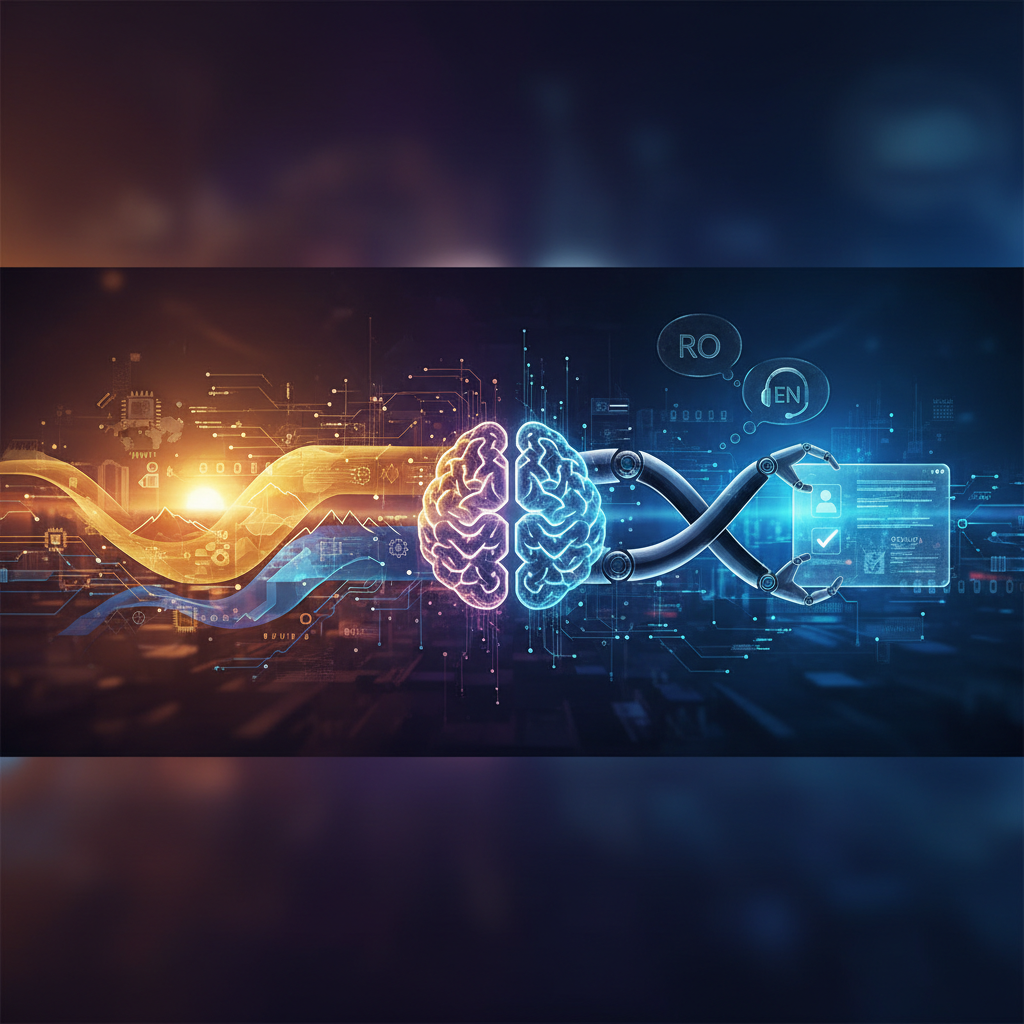
Language barriers are a silent but formidable adversary in the realm of customer support. For businesses operating in a globalized world, or even those serving diverse local populations, the inability to communicate effectively with customers can lead to frustration, prolonged resolution times, and ultimately, a diminished customer experience. This challenge is particularly acute in technical support, where precise communication is paramount to diagnosing and resolving complex issues. Romania, with its growing tech sector and multilingual workforce, stands at a unique intersection where AI-powered bilingual virtual assistants can profoundly impact Tier 1 technical support.
The Lingual Hurdle in Customer Support
Imagine a customer facing a critical technical problem, struggling to articulate the nuances of their issue in a language that isn't their native tongue. This scenario plays out daily for countless individuals. When a support operation is primarily geared towards one language, customers who cannot fully express themselves in that language are immediately at a disadvantage. This isn't due to a lack of capability on the organization's part, but rather an infrastructural limitation. The very tools designed to deliver quality support—trained agents, comprehensive knowledge bases, interactive voice response (IVR) systems, and automated responses—are often built with a specific linguistic framework in mind. Consequently, customers speaking other languages receive a subpar level of service, not because of indifference, but because the existing infrastructure doesn't cater to their linguistic needs.
For organizations with a global footprint, this isn't a theoretical risk; it's a persistent operational challenge. While the traditional approach has been to hire multilingual agents, this solution is often cost-prohibitive, operationally complex, and practically limited. Businesses cannot realistically staff dedicated teams for dozens of languages. This leaves them with a difficult choice: provide acceptable service in major languages and inadequate service everywhere else.
Multilingual AI: A Paradigm Shift in Support
This is where multilingual AI support steps in as a game-changer. By operating natively across multiple languages simultaneously, AI virtual assistants eliminate the need for language-specific routing or dedicated staffing for each language. More importantly, they ensure that the quality of support remains consistent, regardless of how common or uncommon a customer's language might be. This translates to genuinely global support quality at a fraction of the cost and complexity associated with the traditional multilingual staffing model.
Consider the plight of a customer contacting support in a language not adequately served by an organization. They might be misunderstood, immediately rerouted, or asked to switch channels. If they proceed in a second language, their ability to describe complex, nuanced situations is compromised, leading to less complete information, less precise resolutions, and extended interaction times. The emotional toll—frustration, anxiety—only exacerbates the situation.
The Advantages of Bilingual AI for Tier 1 Technical Support in Romania
For businesses in Romania, embracing bilingual (Romanian/English) AI chatbots for Tier 1 technical support offers a compelling array of advantages:
- Enhanced Customer Satisfaction: By providing immediate and accurate support in both Romanian and English, businesses can ensure a seamless experience for a wider range of customers. This eliminates frustration caused by language barriers, leading to higher satisfaction levels.
- Improved Efficiency and Cost Reduction: AI chatbots can handle a high volume of routine inquiries, frequently asked questions, and initial troubleshooting steps. This frees up human agents to focus on more complex issues, leading to increased efficiency and reduced operational costs associated with staffing a large multilingual support team.
- 24/7 Availability: Unlike human agents, AI chatbots can provide round-the-clock support, effortlessly extending operational hours without additional staffing expenses. This is particularly beneficial for customers in different time zones or those requiring assistance outside of standard business hours.
- Consistent Information Delivery: AI chatbots deliver consistent, accurate information every time. This reduces the risk of human error or variations in responses, ensuring a standardized quality of service across all interactions.
- Scalability: As businesses grow and their customer base expands, AI chatbots can easily scale to meet increased demand without significant investment in additional personnel or training.
- Faster Resolution Times: By quickly understanding and addressing common issues in the customer's preferred language, chatbots can significantly reduce resolution times, leading to a more positive customer experience.
- Data-Driven Insights: AI chatbots collect valuable data on customer inquiries, common problems, and language preferences. This data can be analyzed to identify trends, improve knowledge base content, and refine service offerings.
Implementing Bilingual AI: A Strategic Move
Businesses looking to implement bilingual AI for Tier 1 technical support in Romania should consider several key factors. The AI model needs to be trained on rich datasets in both Romanian and English, covering technical jargon, product-specific information, and common customer queries. The integration with existing systems, such as CRM and knowledge bases, is also crucial for a seamless workflow.
Furthermore, while AI chatbots excel at handling routine tasks, it's important to establish clear escalation paths to human agents for complex or sensitive issues that require human empathy and nuanced problem-solving. A hybrid approach, where AI and human agents collaborate, often yields the most effective results.
The Future of Support is Bilingual and AI-Powered
The integration of bilingual AI virtual assistants represents a significant leap forward for customer support in Romania, particularly in the technical domain. By breaking down language barriers and offering efficient, scalable, and consistent support, businesses can not only enhance customer satisfaction but also achieve substantial operational efficiencies. In an increasingly competitive landscape, leveraging this technology is no longer just an advantage; it's becoming a necessity for delivering truly exceptional customer service.
Sources
- Multilingual AI Support: Serve Global Customers Without Language Barriers (https://www.eecommerceai.com/post/multilingual-ai-support-serving-global-customers-without-multilingual-teams)
Frequently asked questions
How can bilingual AI chatbots benefit technical support in Romania?
Bilingual AI chatbots, especially in Romanian and English, enhance customer satisfaction, improve efficiency, and reduce costs in technical support by handling routine inquiries, providing 24/7 availability, and ensuring consistent information delivery.
What challenges do language barriers pose in customer support?
Language barriers in customer support lead to frustration, prolonged resolution times, and diminished customer experiences. They create infrastructural limitations where existing tools and agents may not cater to diverse linguistic needs, resulting in subpar service.
Why is bilingual AI considered a game-changer for customer support?
Multilingual AI eliminates the need for language-specific routing or dedicated staffing, offering consistent support quality across multiple languages simultaneously. It provides global support at a fraction of the cost and complexity of traditional multilingual staffing models.
What are the advantages of using bilingual AI for Tier 1 technical support in Romania?
Advantages include enhanced customer satisfaction, improved efficiency, cost reduction, 24/7 availability, consistent information delivery, scalability, faster resolution times, and valuable data-driven insights for businesses.
What should businesses consider when implementing bilingual AI for technical support?
Businesses should ensure AI models are trained on rich datasets in both Romanian and English, integrate with existing systems like CRM, and establish clear escalation paths to human agents for complex or sensitive issues, adopting a hybrid approach.
Can AI chatbots replace human agents in technical support?
While AI chatbots excel at handling routine tasks and FAQs, they do not replace human agents entirely. A hybrid approach, combining AI for efficiency and human agents for complex or empathetic interactions, yields the most effective results.