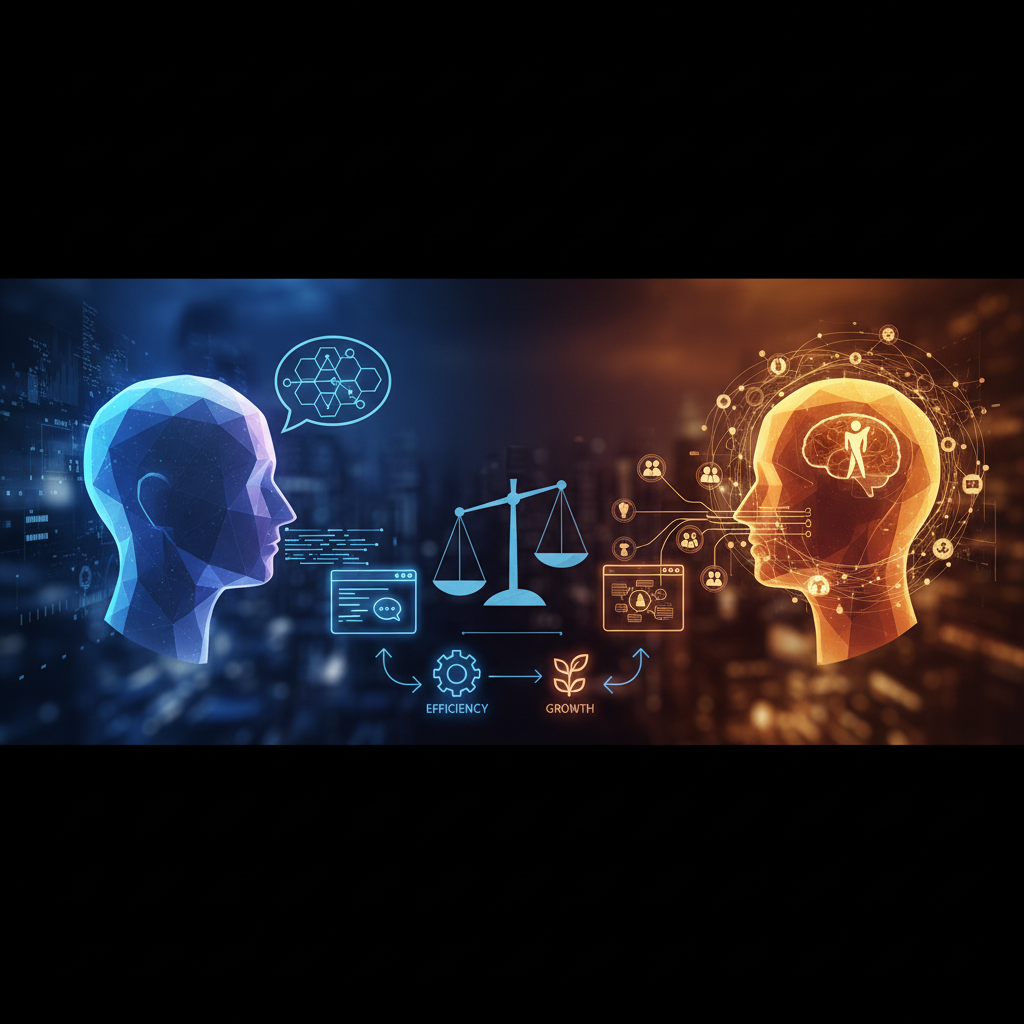
Chatbot vs. AI Agent: Decoding the Best Choice for Your Business
The digital transformation era has placed Artificial Intelligence at the forefront of business innovation. Companies are eager to leverage AI to streamline operations, enrich customer interactions, and unlock new growth opportunities. However, navigating the diverse world of AI can be complex, especially when faced with terms like "chatbot" and "AI agent." While often used interchangeably, these two concepts represent different levels of AI sophistication and functionality. Choosing between them requires a clear understanding of your business needs and long-term objectives.
Chatbots: The Conversational Interface
Chatbots are perhaps the most recognizable form of AI for the general public, primarily designed to simulate human conversation through text or voice. They excel at handling predefined queries, providing instant answers to frequently asked questions, and automating routine tasks. Think of a chatbot as a digital assistant with a specific set of instructions it follows diligently.
Key Characteristics of Chatbots:
- Rule-based or AI-powered: Some chatbots operate on a set of predetermined rules and scripts, while others leverage natural language processing (NLP) and machine learning (ML) to understand and respond to user input more dynamically.
- Task-specific: They are typically designed for particular functions, such as customer support, lead generation, or information retrieval within a limited domain.
- Efficiency in repetitive tasks: Chatbots can significantly reduce the workload on human agents by automating responses to common inquiries, available 24/7.
- User-friendly interface: They are often integrated into websites, messaging apps, and social media platforms, providing easy accessibility for users.
While highly effective for their intended purposes, chatbots generally have limitations in handling complex, nuanced, or off-script conversations. Their ability to "learn" or adapt beyond their programmed parameters is often restricted.
AI Agents: Autonomous and Goal-Oriented Intelligence
Moving beyond the conversational capabilities of chatbots, AI agents represent a more advanced form of artificial intelligence. An AI agent is a software entity that can perceive its environment, make decisions, and take actions to achieve specific goals, often without direct human supervision. They are designed for greater autonomy, adaptability, and problem-solving capabilities.
Key Characteristics of AI Agents:
- Autonomy: AI agents can operate independently, initiating actions and making decisions based on their understanding of the environment and objectives.
- Goal-oriented: Unlike chatbots that primarily react to user input, AI agents are driven by specific goals they strive to achieve through a series of steps.
- Learning and adaptation: Many AI agents incorporate advanced machine learning models, allowing them to learn from interactions, adapt to new information, and improve their performance over time.
- Complex problem-solving: They can handle more intricate tasks that require analysis, planning, and execution across multiple systems or data sources.
- Contextual understanding: AI agents often possess a deeper understanding of context, enabling them to engage in more meaningful and continuous interactions.
- Integration with various tools: They can often integrate with a wide range of external tools and APIs to gather information, perform actions, and automate workflows.
Consider the example of Google's Gemini or Anthropic's Claude. These are not merely chatbots; they are sophisticated AI agents capable of coding assistance, extensive long-form writing and analysis, and navigating vast amounts of information, demonstrating a level of agency and problem-solving beyond traditional chatbots.
Chatbot vs. AI Agent: The Deciding Factors for Your Business
The choice between a chatbot and an AI agent hinges on several critical factors related to your business objectives, the complexity of tasks, and the desired level of autonomy.
-
Complexity of Tasks:
- Chatbot: Ideal for repetitive, well-defined tasks with predictable user queries, such as answering FAQs, providing basic product information, or routing customer service requests.
- AI Agent: Suited for complex tasks requiring problem-solving, decision-making, data analysis, and multi-step processes, like personalized recommendations, research, coding, or managing intricate workflows.
-
Level of Autonomy Required:
- Chatbot: Operates largely based on programmed rules or guided by user inputs, with limited autonomy.
- AI Agent: Designed for higher autonomy, capable of initiating actions, learning from experiences, and adapting to achieve goals without constant human intervention.
-
Depth of Interaction:
- Chatbot: Provides typically shallow, transactional interactions focused on getting a specific piece of information or completing a simple task.
- AI Agent: Facilitates deeper, more contextual, and continuous interactions, capable of engaging in sophisticated dialogues and collaborative problem-solving.
-
Resource Investment and Scalability:
- Chatbot: Generally less resource-intensive to develop and deploy for basic functionalities. Scalability is straightforward for handling increased conversational volume.
- AI Agent: Requires a more significant investment in development, data, and infrastructure due to its advanced capabilities. However, its ability to automate complex tasks can lead to substantial long-term efficiencies and scalability in business processes.
-
Use Cases:
- Chatbot Examples: Customer service FAQs, website navigation assistance, basic order tracking, simple lead qualification, internal HR support for common queries.
- AI Agent Examples: Personalized sales agents, complex technical support, research assistants that synthesize information, code generation and debugging, creative content generation, project management automation.
Making the Right Choice
When evaluating which AI solution is best for your company, consider the following questions:
- What specific problems are you trying to solve? Are they simple, repetitive queries, or complex, multi-faceted challenges?
- What level of intelligence and adaptability is necessary? Do you need an AI that just answers questions, or one that can learn, strategize, and execute?
- What is your budget and timeline for implementation? More sophisticated AI agents typically require greater upfront investment.
- How will the AI integrate with your existing systems and human teams? Both solutions should ideally augment human capabilities rather than replace them entirely.
For many businesses, a hybrid approach might be the most effective. Implementing chatbots for front-line customer interactions and common inquiries, while leveraging AI agents for more complex back-end operations, data analysis, or personalized customer journeys, can offer the best of both worlds. The key is to start with a clear understanding of your needs and gradually scale your AI initiatives as your business evolves.
In conclusion, while chatbots are excellent for automating direct, conversational tasks, AI agents represent a leap towards autonomous, goal-driven problem-solving. Your decision should reflect the complexity of your operational needs and your strategic vision for AI integration within your enterprise.
Sources
- PrompturiAI - Ce sunt agenții AI? Ghid complet pentru începători (What are AI agents? A complete guide for beginners)
- The Markers - Claude - cum se compară inteligența artificială a Anthropic cu... (Claude - how Anthropic's artificial intelligence compares with...)
- nxcode.io - Claude vs ChatGPT 2026: Melyik AI-t érdemes valójában használnod? (Claude vs ChatGPT 2026: Which AI should you actually use?)
Frequently asked questions
What is the primary difference between a chatbot and an AI agent?
Chatbots are designed for simulating conversation and handling predefined, repetitive queries, often rule-based or using basic NLP. AI agents are more advanced, perceiving environments, making decisions, and autonomously acting to achieve complex, goal-oriented tasks with learning and adaptation capabilities.
When should my business use a chatbot?
Your business should use a chatbot for repetitive, well-defined tasks like answering frequently asked questions, providing basic information, routing customer service requests, and automating routine customer interactions. They are efficient for specific, limited functions and offer 24/7 availability for user-friendly interfaces.
What tasks are best suited for an AI agent?
AI agents are best suited for complex tasks requiring problem-solving, decision-making, data analysis, and multi-step processes. Examples include personalized recommendations, research, coding assistance, managing intricate workflows, and generating creative content, leveraging their autonomy and adaptability.
Can AI agents learn and adapt?
Yes, many AI agents incorporate advanced machine learning models, enabling them to learn from interactions, adapt to new information, and continuously improve their performance over time. This allows for deeper contextual understanding and more meaningful, continuous interactions.
Is a hybrid approach between chatbots and AI agents beneficial?
Yes, a hybrid approach can be highly effective. Deploying chatbots for front-line customer interactions and common inquiries, while utilizing AI agents for complex back-end operations, data analysis, or personalized customer journeys, can offer a comprehensive and efficient AI solution for your business.