Navigating the AI Frontier: A Mid-Sized E-commerce Guide to Chatbots and AI Agents (2025)
The Imperative of AI in E-commerce: Beyond the Hype
In the dynamic landscape of e-commerce, customer expectations are perpetually evolving. Today's online shoppers demand instantaneous, transparent support and personalized interactions. A delayed response or an inaccurate answer to a critical query can swiftly erode trust and impact sales. This escalating demand has propelled AI chatbots and intelligent agents from a novel concept to an indispensable tool for online retailers, particularly mid-sized businesses striving to compete with larger players.
The year 2025 is poised to be a crucial period for e-commerce, with AI solutions becoming more sophisticated and accessible. For mid-sized online stores, the strategic integration of AI can not only optimize operational efficiency but also transform customer service into a powerful revenue engine. This guide delves into the essential considerations for selecting the right AI chatbot or agent, ensuring your investment truly enhances the customer journey and boosts your bottom line.
Why AI Chatbots Are No Longer Optional for Mid-Sized E-commerce
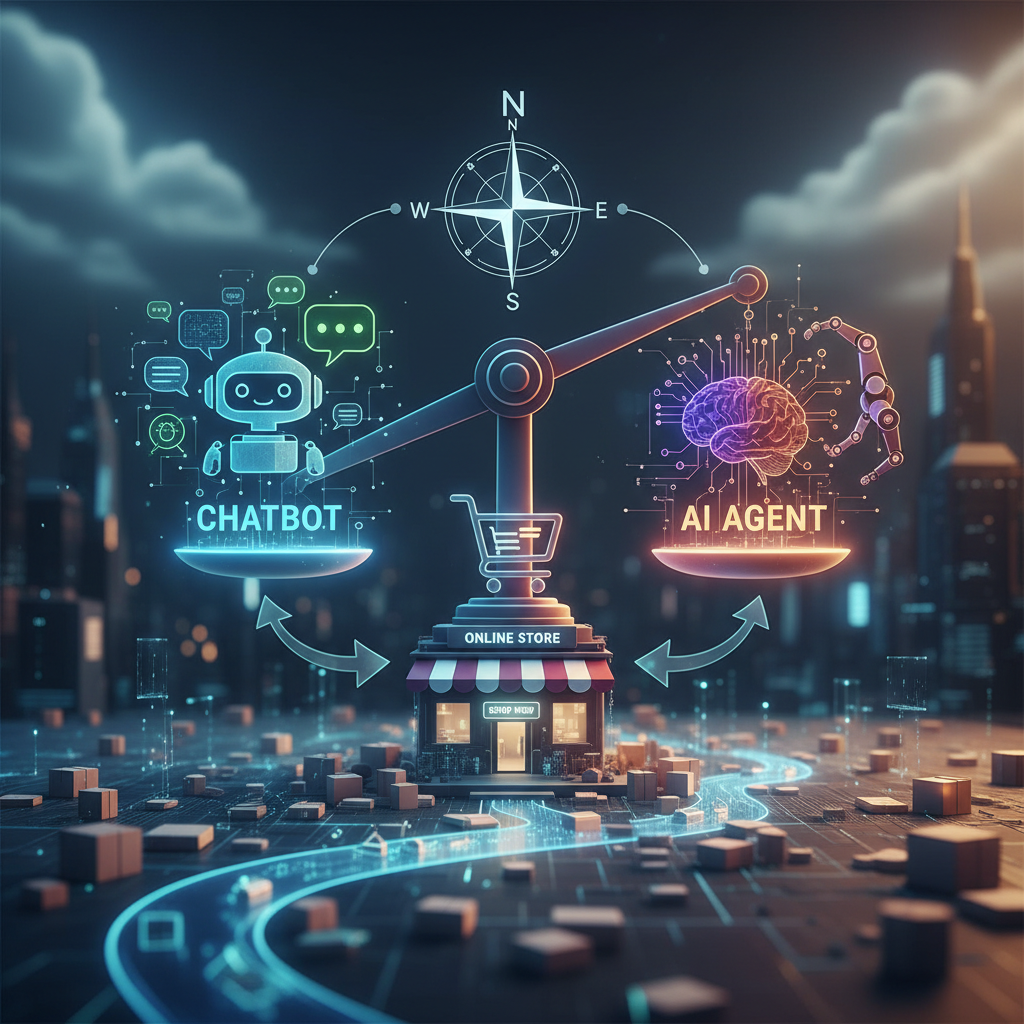
Historically, the notion of chatbots might have conjured images of rudimentary, rule-based systems. However, the evolution of AI has birthed intelligent agents capable of much more than just canned FAQ responses. For a mid-sized e-commerce business, a well-implemented AI solution can:
- Provide 24/7 Product Guidance: AI agents can tirelessly answer product-related questions, guiding customers through their options at any time of day or night, regardless of time zones.
- Automate Order Inquiries: From tracking details to return policies, AI can handle a vast majority of routine customer queries, freeing up human agents for more complex issues.
- Turn Support into Sales: By offering personalized recommendations and proactively addressing potential barriers to purchase, AI can convert customer interactions into tangible sales opportunities.
- Enhance Personalization: AI can analyze customer data to offer tailored experiences, from product suggestions to customized offers, fostering stronger customer loyalty.
Key Considerations for Selecting Your E-commerce AI Solution
Choosing the right AI chatbot or agent requires a strategic approach. It's not merely about picking the flashiest technology but identifying a solution that aligns with your business objectives and budget. Here are the critical factors to evaluate:
1. Core Functionality and Capabilities
Beyond basic Q&A, assess what truly makes an AI chatbot "best" for e-commerce. Look for solutions that offer:
- Conversational AI: The ability to understand natural language, intent, and context, rather than just keyword matching.
- Integration with E-commerce Platforms: Seamless connectivity with your existing e-commerce platform (e.g., Shopify, Magento) for accessing product catalogs, order history, and customer data.
- Proactive Engagement: Can the AI initiate conversations based on browsing behavior or cart abandonment?
- Multichannel Support: Does it operate across various channels like your website, social media, and messaging apps?
- Personalization Features: The capacity to deliver individualized experiences based on past purchases, browsing history, and preferences.
2. Pricing Models: Understanding the Variances
AI chatbot pricing models can vary significantly, making a clear understanding crucial for mid-sized businesses. Common models include:
- Conversation-based: Paying per interaction or conversation.
- Per-agent/Per-user: Costs tied to the number of human agents or users of the system.
- Per-resolution/Per-session: Charges based on successful issue resolutions or conversational sessions.
- Platform Fee + Add-ons: A base platform fee with additional costs for advanced features or higher usage.
Tools like Alhena AI offer conversation-based pricing, while Zendesk AI and Freshdesk's Freddy AI often operate on a per-agent model with additional per-resolution or per-session fees. Gorgias Automate may have a ticket-based model with AI interaction add-ons. It's vital to project your expected usage and compare how different models translate to your budget.
3. Integration Ecosystem and Scalability
An effective AI solution shouldn't exist in isolation. It needs to seamlessly integrate with your existing tech stack, including your CRM, helpdesk software, and marketing automation tools. Consider:
- Ease of Integration: How straightforward is it to connect the AI with your current systems?
- API Availability: Robust APIs allow for custom integrations and greater flexibility.
- Scalability: Can the solution grow with your business? As your customer base expands, will the AI gracefully handle increased volumes without significant re-investment or performance degradation?
4. Customization and Training
Every e-commerce business has unique products, customer service nuances, and brand voice. Your chosen AI solution should allow for:
- Training and Learning: The ability to train the AI with your specific product information, FAQs, and customer interaction patterns to improve its accuracy and relevance.
- Brand Voice Implementation: Can the chatbot be configured to communicate in a tone that aligns with your brand personality?
- Workflow Customization: The flexibility to design and automate specific customer service workflows.
5. Analytics and Reporting
To ensure your AI investment delivers measurable returns, look for solutions that provide robust analytics and reporting features. This includes insights into:
- Deflection Rates: How many inquiries are handled by the AI without human intervention?
- Customer Satisfaction Scores (CSAT): How satisfied are customers with AI interactions?
- Conversion Rates: Is the AI contributing directly to sales?
- Identification of Common Issues: What are the recurring customer problems that the AI can address more effectively or that might require product/service improvements?
Top AI Chatbot Options for E-commerce in 2025
While the market is continually evolving, some prominent players offer compelling solutions for mid-sized e-commerce businesses:
- Alhena AI: Positioned as a strong contender for DTC and enterprise e-commerce, offering conversation-based pricing and a focus on turning support conversations into sales. They emphasize real-time product guidance and order inquiry automation.
- Gorgias Automate: Particularly popular among Shopify merchants, Gorgias integrates well with the Shopify ecosystem and offers AI-powered automations to streamline customer service.
- Tidio (Lyro): A good option for SMBs and startups, offering a balance of features and a reasonable pricing structure for its AI capabilities.
- Zendesk AI & Intercom Fin: If you're already using Zendesk or Intercom for your customer service, their integrated AI solutions can be a natural extension, offering per-agent or per-resolution models respectively.
The Road Ahead: Turning Customer Support into a Growth Engine
The strategic adoption of AI chatbots and agents is no longer a luxury but a necessity for mid-sized e-commerce businesses aiming for sustained growth and customer satisfaction in 2025 and beyond. By carefully evaluating functionality, understanding pricing models, ensuring seamless integration, and prioritizing customization, you can select an AI solution that not only addresses customer inquiries efficiently but also transforms these interactions into valuable opportunities for sales and brand loyalty. The future of e-commerce customer service is intelligent, personalized, and proactive, and embracing AI is the key to unlocking its full potential.
Sources
- Ringly.io. (2025). 7 Best AI Chatbots for Ecommerce That Boost Sales by 48% (2025).
- Alhena.ai. (2026). 10 Best AI Chatbots for Ecommerce Customer Service (2026).
- Elfsight. (2026). 12 Must-Have Ecommerce AI Tools for Business in 2026.
Frequently asked questions
Why are AI chatbots important for mid-sized e-commerce in 2025?
AI chatbots are crucial for mid-sized e-commerce in 2025 to meet evolving customer expectations for instant, personalized support. They enhance operational efficiency, provide 24/7 product guidance, automate order inquiries, and convert support interactions into sales, helping businesses compete with larger players.
What core functionalities should I look for in an e-commerce AI solution?
When selecting an e-commerce AI solution, look for conversational AI, seamless integration with your e-commerce platform, proactive engagement features, multichannel support, and personalization capabilities. These functionalities ensure the AI can understand natural language, connect with your existing data, and offer tailored customer experiences.
How do pricing models for AI chatbots vary?
AI chatbot pricing models commonly include conversation-based (per interaction), per-agent/per-user, per-resolution/per-session, and platform fee plus add-ons. Understanding these variances is crucial to project expected usage and align the chosen model with your budget for cost-effective implementation.
Why is integration ecosystem important for an AI solution?
An effective AI solution must integrate seamlessly with your existing tech stack, including CRM, helpdesk, and marketing automation tools. Easy integration, robust API availability, and scalability ensure the AI works cohesively within your business operations and can grow with your customer base without performance issues.
How can AI chatbots improve customer satisfaction?
AI chatbots improve customer satisfaction by providing instant 24/7 support, accurately answering product and order-related questions, and offering personalized recommendations. This reduces wait times, ensures consistent information, and frees human agents to handle more complex issues, leading to a smoother and more efficient customer experience.
What metrics should I track to assess AI chatbot performance?
To assess AI chatbot performance, track metrics such as deflection rates (inquiries handled by AI), customer satisfaction scores (CSAT) for AI interactions, conversion rates attributed to AI, and identification of common issues. These insights help measure ROI and pinpoint areas for improvement in both AI and business operations.