
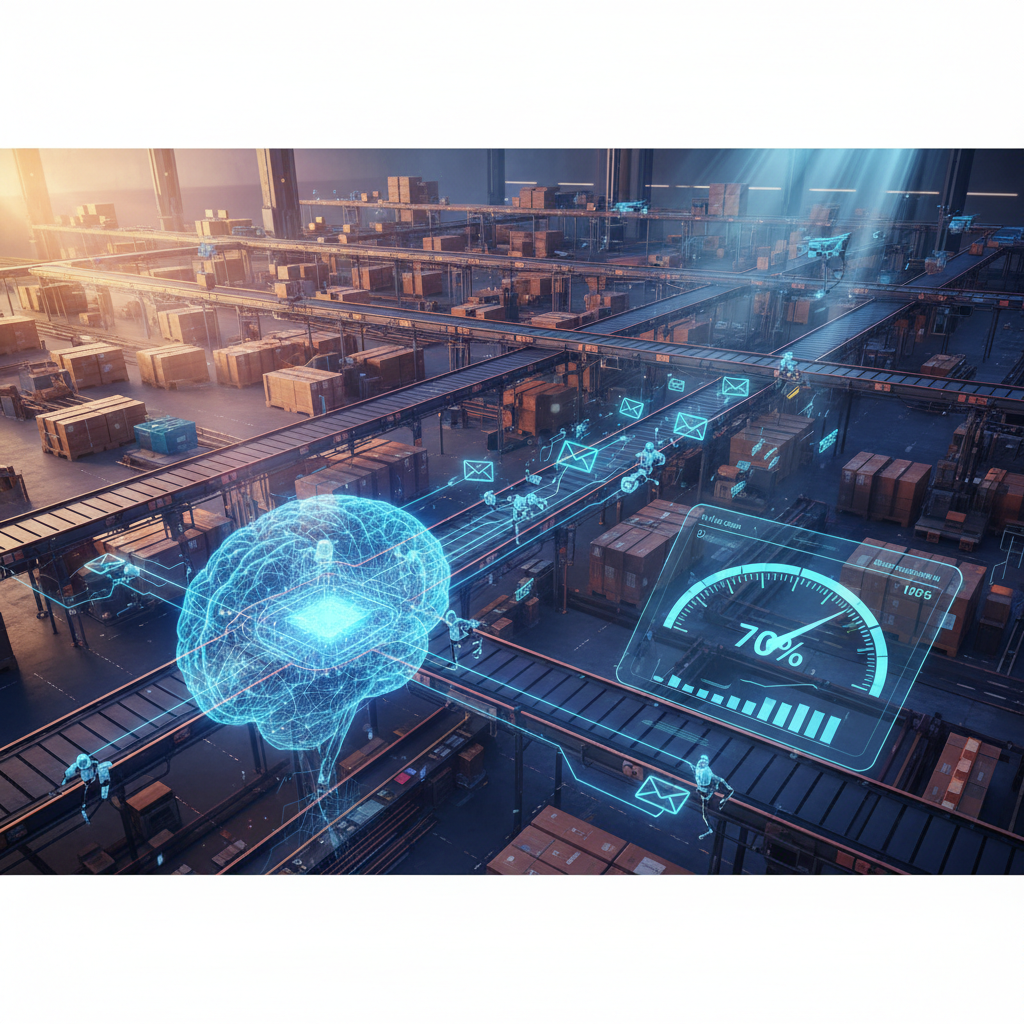
Revolutionizing Logistics: How AI-Powered Autonomous Agents Slash Customer Support Response Times by 70%
The relentless pace of modern commerce demands unparalleled efficiency and responsiveness from the logistics sector. In an environment where timely information and swift problem resolution are paramount, traditional customer support models often buckle under pressure. This is where Artificial Intelligence, specifically autonomous AI agents, are stepping in to redefine customer service in logistics, promising and delivering substantial reductions in response times – by as much as 70%. This paradigm shift isn't just about technological adoption; it's about creating a more agile, customer-centric, and ultimately, more profitable operational framework.
The Evolving Landscape of Logistics Customer Support
Logistics companies face a dual challenge: managing vast and complex networks while simultaneously meeting the escalating expectations of their customer base. Customers today demand instant access to information regarding their shipments, proactive updates, and rapid resolution of any issues. The traditional model, heavily reliant on human agents, often struggles to keep up with this demand, leading to longer wait times, frustrated customers, and increased operational costs. This is where AI chatbots and autonomous agents prove invaluable. They serve as the first line of defense, capable of handling a significant volume of inquiries with speed and accuracy that human agents simply cannot match 24/7.
Autonomous Agents: The Heart of the Transformation
At the core of this revolution are autonomous AI agents – sophisticated virtual systems powered by natural language processing (NLP) and machine learning (ML). These agents aren't just glorified FAQs; they can understand and interpret complex queries, provide real-time updates on shipments, track packages, and even initiate certain actions based on predefined protocols. Their ability to interact directly with customers, mimicking human conversation, makes them incredibly effective.
Key functions of AI autonomous agents in logistics include:
- Instant Query Resolution: Answering frequently asked questions about shipping policies, delivery schedules, and service offerings.
- Shipment Tracking and Status Updates: Providing real-time information on package locations and estimated delivery times.
- Complaint Management (initial triage): Logging issues, gathering initial information, and, in some cases, resolving simple complaints directly.
- Proactive Communication: Sending automated notifications regarding delays or changes in delivery status.
- Data Collection and Analysis: Gathering valuable insights from customer interactions to identify common pain points and improve service over time.
The Tangible Benefits: A 70% Reduction in Response Times
The most compelling argument for integrating autonomous AI agents into logistics customer support is the dramatic reduction in ticket response times. By automating routine inquiries and providing instant assistance, these agents enable businesses to address a large percentage of customer needs without human intervention. This frees up human agents to focus on more complex issues that require critical thinking and nuanced problem-solving. The result? A staggering reduction in waiting times, sometimes by as much as 70%, leading to significantly higher customer satisfaction.
Beyond just speed, other notable advantages include:
- 24/7 Accessibility: Customers can get support at any time, regardless of geographical location or business hours.
- Reduced Operational Costs: Minimizing the need for a large human customer service team translates into substantial cost savings.
- Improved Accuracy: AI agents eliminate human error in providing information, ensuring consistency and reliability.
- Enhanced Customer Satisfaction: Instantaneous responses and accurate information lead to a more positive customer experience.
- Scalability: AI systems can easily handle spikes in inquiry volume without requiring additional staffing.
The Future is Hybrid: Merging AI with Human Expertise
While AI autonomous agents offer immense benefits, it's crucial to acknowledge their limitations. They are excellent at handling repetitive and straightforward tasks, but complex issues, highly emotional interactions, or unique scenarios often still require the empathy and problem-solving skills of a human agent. Therefore, the most effective customer support strategy in logistics lies in a hybrid model, where AI agents act as the first point of contact, seamlessly escalating complex cases to human representatives.
This synergy ensures that customers receive immediate assistance for common queries while still having access to human expertise when needed. As AI technology continues to advance, the capabilities of autonomous agents will undoubtedly expand, allowing them to tackle even more intricate problems. However, the human element will always remain vital, especially in situations demanding a personal touch or advanced critical thinking.
Conclusion
The implementation of AI-powered autonomous agents is more than just a trend; it's a fundamental shift in how logistics companies approach customer support. By significantly reducing response times, enhancing efficiency, and improving overall customer satisfaction, these intelligent systems are not only streamlining operations but also fostering stronger customer relationships. As the digital era continues to reshape consumer expectations, embracing AI in customer service is no longer an option but a strategic imperative for logistics businesses aiming to thrive in a competitive global market.
Sources
- GetMyAI: How Logistics Companies Use AI to Scale Client Support
- CourierTrackin: Customer Service Automation with AI Chatbots in Logistics
- Academy Police MD: Reconfigurarea protecţiei consumatorilor în era digitală: provocări teoretice şi practice
Frequently asked questions
How do AI-powered autonomous agents help logistics customer support?
AI-powered autonomous agents in logistics customer support reduce ticket response times by up to 70%. They handle instant query resolution, provide shipment tracking, manage initial complaints, and offer 24/7 accessibility, streamlining operations and boosting efficiency.
What are the benefits of using AI in logistics customer service?
The benefits of using AI in logistics customer service include a significant reduction in response times, 24/7 accessibility for customers, lower operational costs, improved accuracy in information, enhanced customer satisfaction, and scalability to handle fluctuating inquiry volumes.
Can AI agents replace human customer service in logistics?
No, the article suggests a hybrid model where AI agents act as the first point of contact for routine tasks, escalating complex issues to human representatives. Human expertise remains vital for nuanced problem-solving and emotional interactions.
What is the impact of AI on logistics customer satisfaction?
AI significantly enhances customer satisfaction in logistics by providing instantaneous responses, accurate information, and 24/7 support. This reduces wait times and frustration, leading to a more positive overall customer experience.
What functions do autonomous AI agents perform in logistics?
Autonomous AI agents in logistics perform functions such as instant query resolution, shipment tracking and status updates, initial complaint management, proactive communication regarding delays, and data collection for service improvement.