The Cost of AI in Public Procurement: Developing an AI Agent for SEAP in Romania
The digital transformation of public procurement is a global imperative, and Romania is no exception. The introduction of the Electronic System for Public Procurement (SEAP) has streamlined many aspects of the tender process. However, the sheer volume and complexity of bids still present significant challenges for businesses. This is where Artificial Intelligence (AI) can offer a transformative solution, automating the analysis of tenders and even drafting proposals. But what does it cost to develop such an AI agent in Romania?
The Promise of AI in Public Procurement
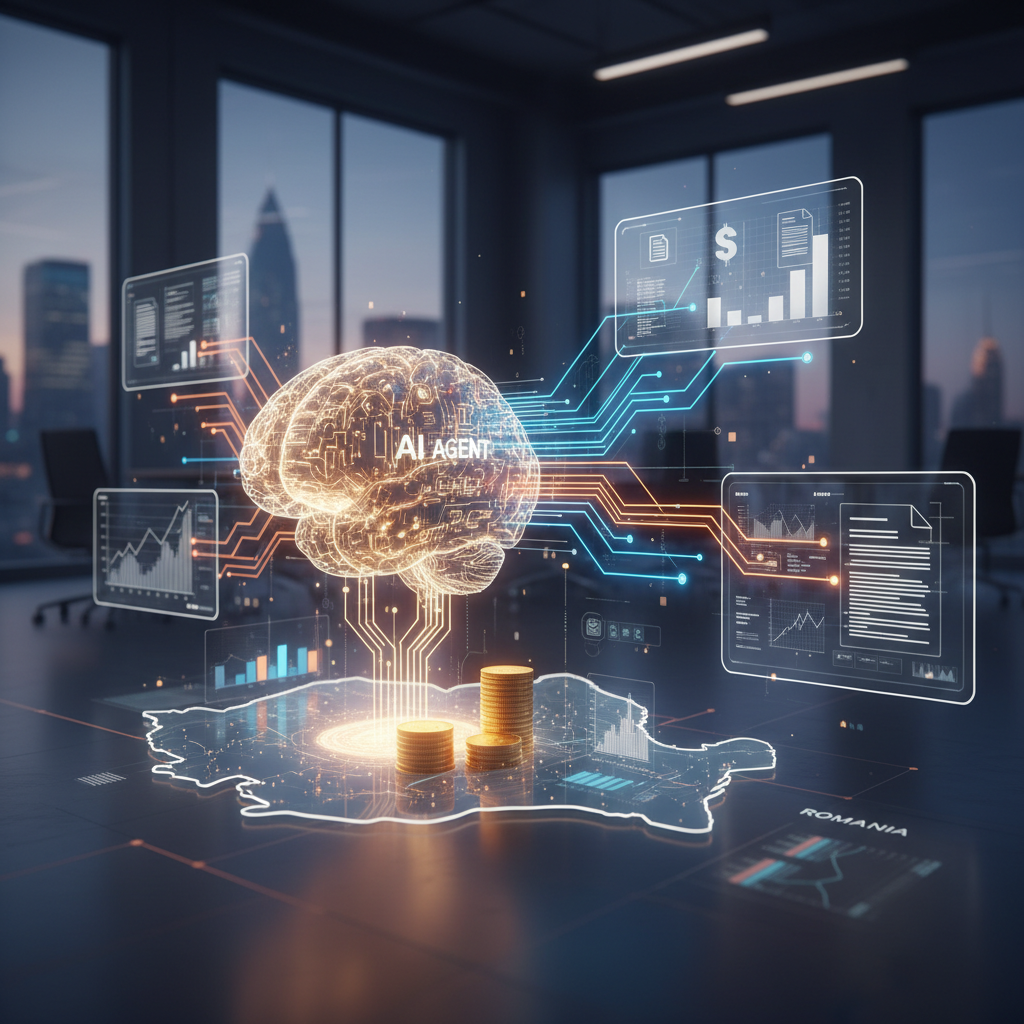
Imagine an AI agent capable of sifting through thousands of public tenders on SEAP, identifying relevant opportunities, analyzing requirements, and even generating initial drafts of bid proposals. This isn't science fiction; it's a tangible application of AI that promises to save countless hours, reduce human error, and increase success rates for companies vying for public contracts. For instance, the AI could quickly process details like those found in a direct acquisition tender (e.g., DA40761754, valued at approximately 4,133.74 EUR), identifying key dates, requirements, and even potential pitfalls.
Key Cost Drivers in AI Development
Developing a specialized AI agent for SEAP involves several critical cost factors, each contributing significantly to the overall investment.
1. Data Acquisition and Preprocessing
The SEAP platform contains a wealth of data, but it's often unstructured or semi-structured. The AI needs to be trained on this data. This involves:
- Data Scraping and Collection: Building robust tools to extract tender information, including specifications, legal documents, and historical outcomes. This can be complex due to varying document formats and potential API limitations.
- Data Cleaning and Annotation: Raw data is rarely usable. It requires extensive cleaning, normalization, and often manual annotation by experts to identify key entities and relationships relevant to tender analysis. This is a labor-intensive process that directly impacts accuracy.
2. Model Development and Training
This is the core of AI development and typically the most expensive component.
- Algorithm Selection and Customization: Deciding on the appropriate AI models (e.g., Natural Language Processing for document understanding, machine learning for prediction and recommendation). This often involves customizing existing open-source models or developing proprietary algorithms.
- Computational Resources: Training large AI models requires significant computational power, often involving cloud-based GPUs. The cost scales with the complexity of the model and the size of the dataset.
- Expert AI Engineers: Hiring skilled AI/ML engineers with expertise in NLP, data science, and potentially legal tech is crucial. Salaries for such specialists in Romania, while potentially lower than in Western Europe or the US, still represent a substantial investment.
3. Integration with SEAP and Other Systems
The AI agent won't operate in a vacuum. It needs to seamlessly integrate with the SEAP platform for data acquisition and potentially with internal company systems for proposal generation and workflow management. This involves:
- API Development/Integration: Creating custom APIs or utilizing existing SEAP APIs (if available and robust) for data exchange.
- Workflow Automation: Integrating the AI's output into existing business processes, such as generating editable draft proposals in common document formats.
4. Maintenance, Updates, and Ongoing Learning
AI models are not "fire and forget." Public procurement rules and SEAP platform functionalities can change. The AI needs continuous attention:
- Regular Updates and Retraining: The model needs to be updated and retrained periodically with new data and changes in regulations to maintain its effectiveness.
- Performance Monitoring: Continuous monitoring of the AI's performance to identify and rectify biases or inaccuracies.
- Scalability: Ensuring the AI agent can handle increasing volumes of tenders and users as the business grows.
Estimated Cost Breakdown in Romania
While providing an exact figure without a detailed scope is challenging, we can offer a general estimation based on common AI development project sizes in Romania.
- Small-Scale PoC (Proof of Concept): For a basic AI agent capable of simple tender filtering and keyword-based analysis, a PoC could range from €15,000 to €40,000. This would likely involve a small team, existing open-source tools, and limited data annotation.
- Mid-Scale MVP (Minimum Viable Product): An MVP with more sophisticated NLP capabilities, basic proposal drafting, and limited integration might cost between €50,000 and €150,000. This would involve dedicated AI engineers, more extensive data processing, and cloud resources.
- Full-Fledged, Advanced AI Agent: A comprehensive solution with advanced semantic analysis, sophisticated proposal generation, robust integration, and continuous learning capabilities could range from €200,000 to €500,000+. This represents a significant investment in a dedicated team, advanced infrastructure, and ongoing development.
These figures are estimates and can fluctuate significantly based on factors such as the complexity of the desired features, the experience of the development team, and the chosen technology stack.
The ROI of AI in Procurement
Despite the upfront investment, the return on investment (ROI) for such an AI agent can be substantial. Businesses can expect:
- Increased Efficiency: Drastically reduced time spent on manual tender analysis.
- Higher Success Rates: Improved accuracy in identifying winning opportunities and crafting compelling proposals.
- Cost Savings: Lower operational costs associated with manual labor and reduced errors.
- Competitive Advantage: A significant edge over competitors still relying on traditional methods.
Conclusion
Developing an AI agent for automated public tender analysis and proposal drafting on SEAP in Romania is a complex but highly rewarding endeavor. While the initial investment can be substantial, the long-term benefits in efficiency, accuracy, and competitive advantage make it a worthwhile strategic move for any company serious about securing public contracts. The future of public procurement is intelligent, and early adopters will undoubtedly reap the greatest rewards.
Sources:
- SEAP (e-licitatie.ro) - Example tender DA40761754
Frequently asked questions
What is an AI agent for SEAP?
An AI agent for SEAP is a specialized artificial intelligence system designed to automate the analysis of public tenders on Romania's Electronic System for Public Procurement (SEAP) and generate initial drafts of bid proposals for businesses.
What are the main cost factors for developing an AI agent for SEAP?
Key cost factors for developing an AI agent for SEAP include data acquisition and preprocessing (scraping, cleaning, annotation), model development and training (algorithms, computational resources, expert engineers), integration with SEAP, and continuous maintenance, updates, and ongoing learning.
What is the estimated cost for a basic AI agent PoC in Romania?
For a basic Proof of Concept (PoC) of an AI agent for SEAP in Romania, capable of simple tender filtering and keyword-based analysis, the estimated cost can range from €15,000 to €40,000.
How much does a full-fledged AI agent for SEAP typically cost?
A comprehensive, advanced AI agent for SEAP with sophisticated semantic analysis, robust proposal generation, seamless integration, and continuous learning capabilities could range from €200,000 to over €500,000 in Romania.
What are the benefits of using an AI agent in public procurement?
Implementing an AI agent in public procurement offers substantial benefits including increased efficiency in tender analysis, higher success rates in securing contracts, significant cost savings by reducing manual labor, and gaining a competitive advantage over traditional methods.
Where does the data for training an AI agent for SEAP come from?
The data for training an AI agent for SEAP primarily comes from the SEAP platform itself. This involves scraping and collecting tender information, specifications, legal documents, and historical outcomes, which then requires extensive cleaning and annotation.