The Hybrid Workforce: Balancing Human Talent and AI in Romanian Service Businesses
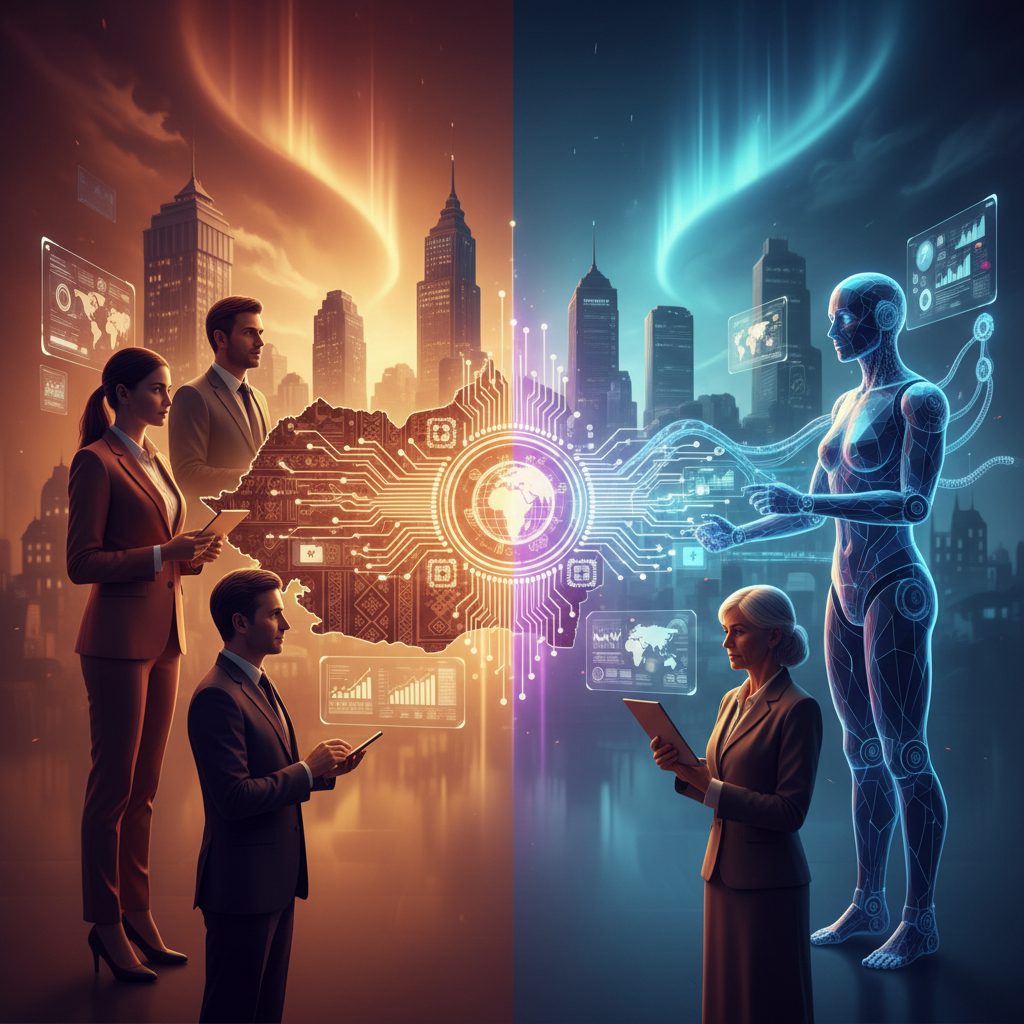
The rise of Artificial Intelligence (AI) has initiated a seismic shift across industries worldwide, and Romania's professional services sector is no exception. While a new landscape is emerging, marked by the hybrid workforce—a blend of human talent and AI agents—Romanian businesses face unique challenges and opportunities in embracing this evolution. The traditional "pyramid" organizational structure, long a staple of professional services, is giving way to a leaner, more agile "obelisk" model, driven by AI's ability to automate foundational tasks and amplify strategic insights.
The Shifting Sands of the Professional Services Landscape
For decades, professional services firms have operated on a hierarchical pyramid where junior staff handled research, data analysis, and the creation of deliverables, while senior personnel focused on interpretation, advisory roles, and client relationships. This model was as much an economic construct as it was an organizational one. However, AI is fundamentally disrupting this paradigm. AI systems can now perform many tasks traditionally assigned to junior consultants—such as data gathering, scenario modeling, and report generation—with greater speed, efficiency, and accuracy. This capability, as highlighted by a Harvard Business Review article, renders the base of the economic pyramid obsolete, necessitating a new organizational structure.
Embracing the "Obelisk" Model
The "obelisk" emerges as the successor to the professional services pyramid. This model is characterized by fewer layers and smaller teams, emphasizing leverage rather than headcount. In this structure, senior judgment—amplified by AI capabilities—achieves what once required extensive teams. The obelisk defines three crucial roles:
- AI Facilitators: These individuals are responsible for managing AI tools and data pipelines, ensuring their optimal performance and integration.
- Engagement Architects: Leaders who oversee projects, interpret AI outputs, and translate these insights into actionable strategies.
- Client Leaders: Professionals who cultivate trusted relationships with senior executives, guiding them through transformations and changes.
This leaner, more specialized approach allows for greater efficiency and strategic focus, enabling firms to deliver higher value with optimized resources.
Romania's AI Adoption Journey: From Curiosity to Concrete Results
While the potential of AI is widely acknowledged globally, Romania currently lags in AI adoption across the European Union, with only 3.07% of companies utilizing this technology. This isn't due to a lack of access to technology itself, but rather a lack of clarity on how to effectively integrate AI into business operations. Many Romanian entrepreneurs are moving beyond mere fascination with AI to confronting the practical questions of "when" and "how" to implement it.
Silviu Niculeci, an AI Operations Consultant at Arggo, identifies two common misconceptions hindering AI adoption in Romania: the "myth of magic" and the "myth of impossibility." The first suggests AI can solve problems effortlessly upon installation, while the second asserts AI is exclusively for tech giants, not mid-sized Romanian companies. The reality, Niculeci states, lies in between: AI is a powerful tool when integrated into clear processes, supported by quality data, and used responsibly. It's a means to an end, with success measured by problems solved rather than the number of models deployed.
Overcoming Barriers: The Path to Successful AI Integration
Cloud services have democratized access to AI technology, making it affordable and accessible to businesses of all sizes, including those in Romania. The current barrier isn't financial; it's the challenge of accurately formulating the problem AI should solve. This underscores the importance of partnering with implementation experts who grasp the intricacies of a business, rather than just vendors selling licenses.
AI agents are increasingly adept at handling routine, repetitive tasks, freeing human talent to focus on more complex, strategic endeavors. This division of labor forms the core of the hybrid workforce, where AI streamlines operations and provides data-driven insights, while human employees leverage their creativity, critical thinking, and emotional intelligence to drive innovation and build strong client relationships.
Building the Hybrid Future
For Romanian service businesses, the journey to a hybrid workforce is about strategic foresight and methodical implementation. It involves:
- Defining Clear Objectives: Identifying specific business problems that AI can solve, rather than adopting AI for its own sake.
- Investing in Training: Equipping human talent with the skills to collaborate with AI agents, interpret their outputs, and manage AI-powered tools.
- Cultivating a Culture of Innovation: Encouraging experimentation and adapting organizational structures to leverage the full potential of AI.
- Choosing the Right Partners: Collaborating with AI implementation experts who understand the nuances of the business and can guide the integration process effectively.
The future of professional services in Romania, much like globally, will be defined by the successful synergy between human ingenuity and artificial intelligence. By strategically embracing the hybrid workforce model, Romanian businesses can overcome existing adoption hurdles, enhance competitiveness, and unlock new avenues for growth and innovation.
Sources
- Accelo. "How AI Is Reshaping the Org Chart for Professional Services." LinkedIn, https://www.linkedin.com/pulse/how-ai-reshaping-org-chart-professional-services-accelo-hm1jc
- Niculeci, Silviu. "From curiosity to results: how Romanian entrepreneurs can integrate artificial intelligence into business operations without failing along the way." Arggo, https://arggo.com/media-hub/from-curiosity-to-results-how-romanian-entrepreneurs-can-integrate-artificial-intelligence-into-business-operations-without-failing-along-the-way/
Frequently asked questions
What is the hybrid workforce model in Romanian professional services?
The hybrid workforce model combines human talent with AI agents in Romanian professional service businesses. AI handles routine tasks, freeing humans for complex, strategic work. This integration aims to optimize operations, enhance efficiency, and drive innovation within the sector.
How is AI changing organizational structures in professional services?
AI is transforming traditional "pyramid" organizational structures into leaner "obelisk" models in professional services. This new model reduces layers, emphasizes leverage over headcount, and defines roles like AI Facilitators, Engagement Architects, and Client Leaders to maximize efficiency and strategic focus.
What are the main challenges for AI adoption in Romania?
Romania faces challenges in AI adoption primarily due to a lack of clarity on effective integration into business operations. Misconceptions, such as AI being a magic solution or only for large tech giants, also hinder its widespread use among mid-sized companies, despite accessible technology.
How can Romanian businesses successfully integrate AI?
Successful AI integration for Romanian businesses involves defining clear objectives for AI, investing in human training to collaborate with AI tools, fostering a culture of innovation, and choosing expert partners who understand business nuances. This strategic approach ensures AI solves specific problems effectively.