Unlocking Growth: Essential AI Use Cases for Romanian B2B Companies
Unlocking Growth: Essential AI Use Cases for Romanian B2B Companies
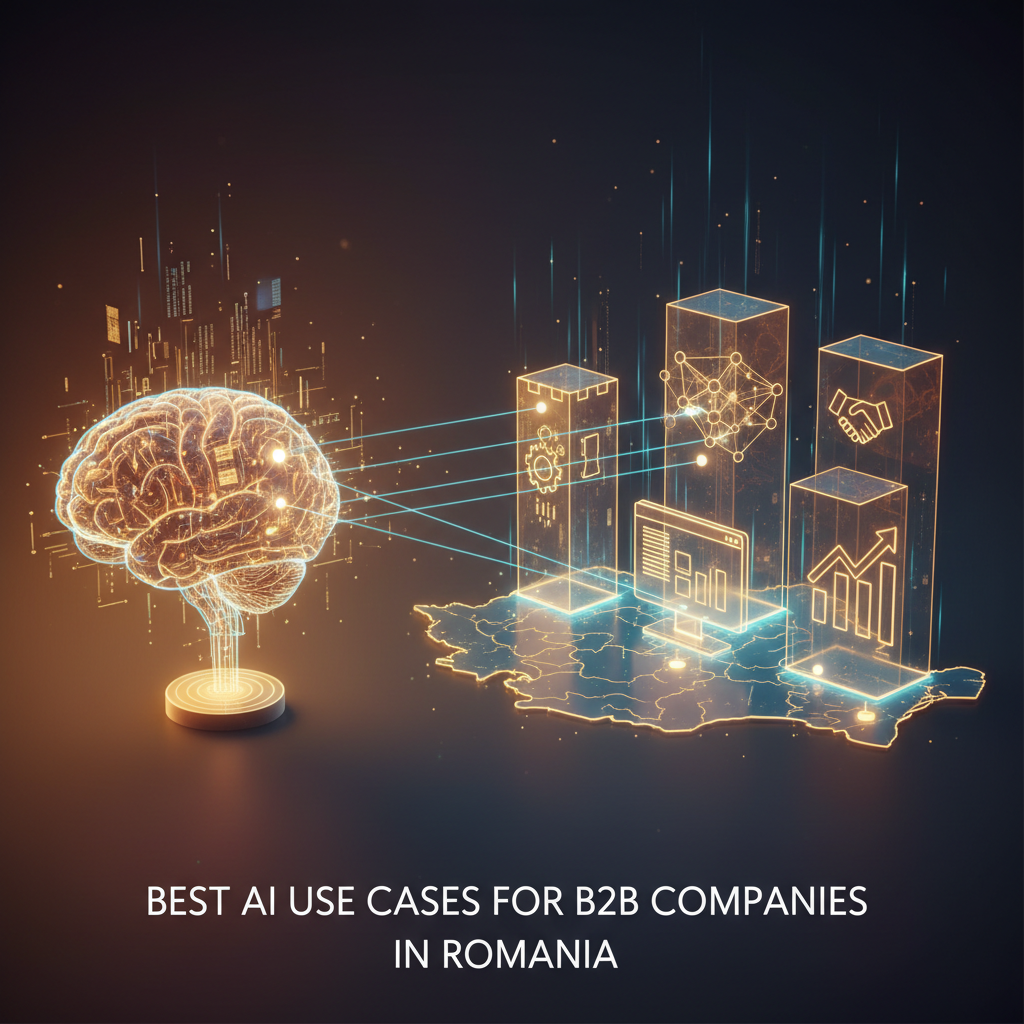
In the dynamic landscape of modern business, Artificial Intelligence (AI) has emerged as a transformative force, particularly for B2B companies seeking a competitive edge. For Romanian enterprises, integrating AI isn't just about adopting new technology; it's about strategically leveraging intelligent solutions to automate processes, enhance decision-making, and unlock new avenues for growth. While the initial enthusiasm for AI is palpable across executive teams, the real challenge lies in identifying practical applications that deliver tangible returns on investment. This article delves into the most impactful AI use cases for Romanian B2B companies, drawing insights from local entrepreneurial successes and global best practices.
The Automation Imperative: Streamlining Operations with AI
One of the most immediate and impactful benefits of AI for B2B businesses is its ability to automate repetitive and time-consuming tasks. This isn't about replacing human workers but empowering them to focus on more strategic and creative endeavors. Romanian startups are already pioneering this approach. For instance, Conresti Solutions, co-founded by Mihai Gheorghe, focuses on digitizing and automating repetitive processes for small and medium-sized enterprises (SMEs) in Romania. This highlights a crucial shift: AI as a powerful instrument that enhances efficiency, allowing employees to achieve more in less time.
Key areas for AI-driven automation include:
- Customer Relationship Management (CRM) Automation: AI can process customer data, categorize inquiries, and even initiate personalized communications, freeing up sales and support teams. Chatbots powered by AI can handle routine customer queries, providing instant support and escalating complex issues to human agents.
- Data Entry and Processing: Manual data entry is prone to errors and incredibly inefficient. AI-powered tools can automatically extract, categorize, and cross-reference data from various sources, such as invoices, contracts, and customer forms, significantly reducing operational costs and improving data accuracy.
- Supply Chain Optimization: AI algorithms can analyze vast datasets related to inventory, logistics, and demand fluctuations to optimize supply chain routes, predict potential disruptions, and manage stock levels more efficiently. This leads to reduced waste, lower transportation costs, and improved delivery times.
- Financial Operations: Automating tasks like expense reporting, invoice processing, and fraud detection with AI can streamline financial operations, reduce the risk of human error, and accelerate financial closures.
Enhancing Decision-Making and Strategy with AI-Powered Insights
Beyond automation, AI's capacity for advanced data analysis offers unparalleled insights that can inform strategic decision-making. For B2B companies, this means moving beyond guesswork and relying on data-driven intelligence to shape their business strategies.
- Predictive Analytics for Sales and Marketing: AI can analyze historical sales data, market trends, and customer behavior to predict future demand, identify potential leads, and personalize marketing campaigns. This allows B2B companies to target their efforts more effectively, leading to higher conversion rates and improved customer acquisition.
- Risk Management and Fraud Detection: AI algorithms can sift through large volumes of transactional data to identify unusual patterns and anomalies that might indicate fraudulent activities. This is particularly crucial for financial institutions and businesses handling sensitive data, significantly mitigating financial risks.
- Market Research and Competitive Analysis: AI tools can scour the internet for competitive intelligence, analyze industry reports, and identify emerging trends. This empowers B2B companies to stay ahead of the curve, adapt to market changes swiftly, and refine their product offerings.
- Product Development and Innovation: By analyzing customer feedback, market gaps, and technological trends, AI can provide valuable insights that guide product development teams in creating solutions that genuinely meet market needs and foster innovation.
Measuring AI Success: Beyond the Initial Hype
While the potential of AI is immense, many companies struggle to concretely measure the Return on Investment (ROI) of their AI implementations. This often leads to projects stalling at the pilot phase. As highlighted by industry analyses, the ROI of AI differs significantly from traditional IT investments due to three critical factors:
- Usage-Based Costs: Modern AI models are often billed per usage (e.g., per token for large language models). This means success can paradoxically increase costs. Companies need to factor in this variable cost structure rather than a fixed license fee.
- Multifaceted Benefits: Unlike traditional IT systems that might reduce costs or increase revenue, AI often impacts all three key areas: cost reduction (automation), revenue generation (personalization, sales), and risk mitigation (fraud detection, compliance). A comprehensive ROI calculation must encompass all these benefits.
- Non-Linear Time to Benefit: The real benefits of AI often materialize over a longer period than initially anticipated. A functioning Proof of Concept (PoC) in a few weeks doesn't equate to immediate ROI. It takes time for prompt calibration, model fine-tuning, team adoption, and process re-engineering. Companies that measure ROI after only 30 days are likely to conclude, incorrectly, that the AI implementation is not working.
To effectively measure AI ROI, B2B companies in Romania must adopt a framework that explicitly separates these three categories of impact. This framework should track tangible metrics related to cost savings, revenue growth attributed to AI, and the reduction in business risks. Regular monitoring and adjustment based on these metrics are essential for demonstrating the true value of AI initiatives.
Conclusion: The Future is Intelligent
For Romanian B2B companies, embracing AI is not merely an option but a strategic imperative for sustained growth and competitiveness. From automating mundane tasks to providing deep insights for critical decision-making, AI offers a wealth of opportunities to optimize operations, enhance customer experience, and drive significant business value. By understanding the unique nature of AI ROI and adopting a holistic approach to implementation and measurement, businesses can navigate the complexities of AI integration and unlock its full transformative potential.
Sources
- StartupCafe.ro - Business CheckIn: Mihai a co-fondat un startup de inteligență artificială care automatizează procesele din IMM-uri: AI-ul încă nu poate înlocui pe cineva
- Cursuri-AI.ro - Cum măsori ROI-ul unei implementări AI în compania ta (2026)
Frequently asked questions
How can AI help Romanian B2B companies grow?
AI can help Romanian B2B companies grow by automating repetitive tasks, enhancing strategic decision-making with data-driven insights, and optimizing various operations. This leads to increased efficiency, improved customer engagement, and significant returns on investment.
What are common AI automation uses in B2B?
Common AI automation uses in B2B include CRM automation for customer inquiries, automated data entry and processing, supply chain optimization for logistics and inventory, and streamlining financial operations like expense reporting and fraud detection.
How does AI improve decision-making for B2B businesses?
AI improves decision-making for B2B businesses through predictive analytics for sales and marketing, identifying fraud risks, competitive analysis, and providing insights for product development. This allows for data-driven strategies and informed business choices.
What are the challenges in measuring AI ROI?
Measuring AI ROI presents challenges due to usage-based costs of modern AI models, multifaceted benefits impacting cost reduction, revenue generation, and risk mitigation, and a non-linear time to benefit, as real advantages emerge over a longer period.
Why is AI critical for Romanian B2B companies?
AI is critical for Romanian B2B companies as it's a strategic imperative for sustained growth and competitiveness. It offers opportunities to optimize operations, enhance customer experience, and drive significant business value by transforming traditional processes.