Vision AI & ERP for Building Materials Warehouses
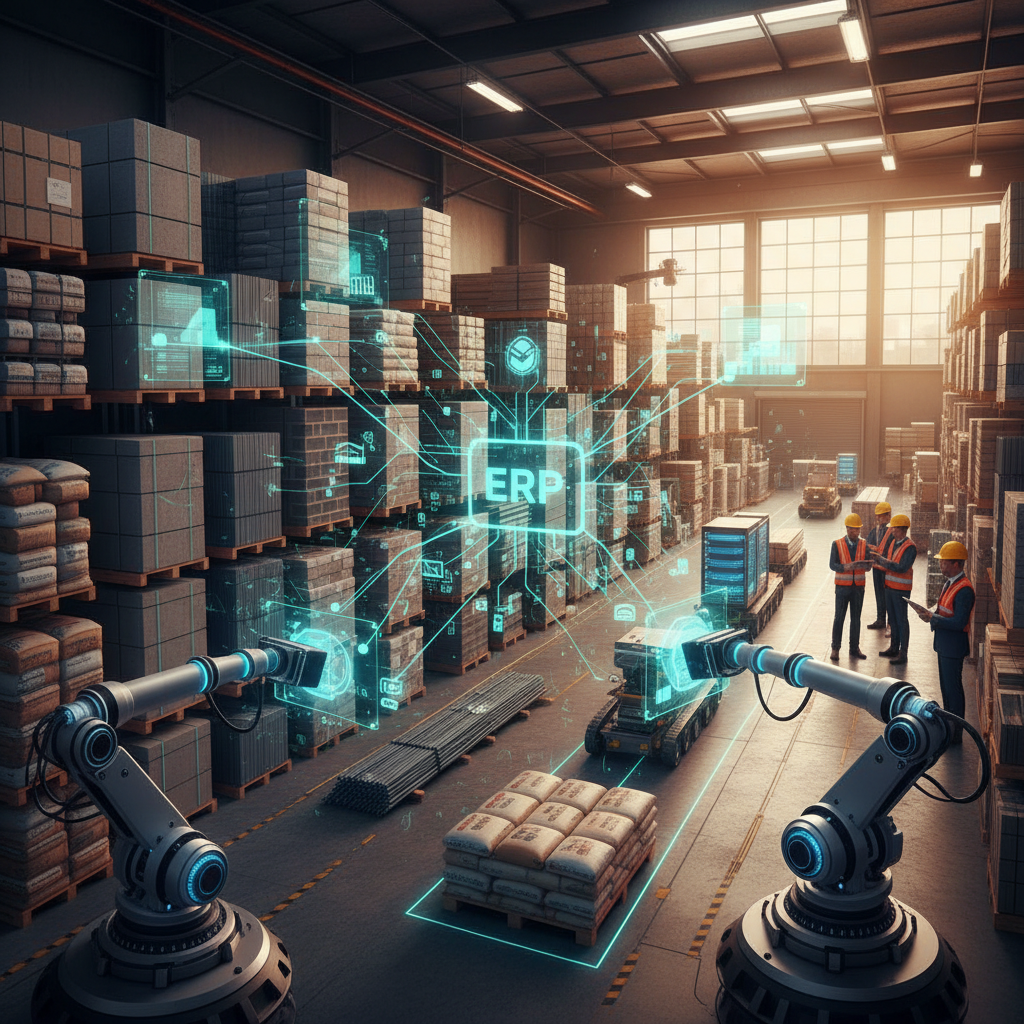
Vision AI, combined with Enterprise Resource Planning (ERP) systems, represents a transformative approach to warehouse management in the building materials sector. By automating visual data analysis and integrating it with core business operations, companies can achieve unprecedented levels of efficiency, accuracy, and cost reduction. This powerful synergy addresses the unique challenges of handling diverse, often bulky, and sometimes fragile construction materials. It ensures that businesses can optimize their supply chain and meet fluctuating market demands effectively.
Vision AI is a branch of artificial intelligence that enables computers to "see," identify, and process images and videos in the same way humans do. In a warehouse context, this means cameras capture visual information, and AI algorithms analyze it to perform tasks like object recognition, anomaly detection, and measurement.
Why should building materials warehouses adopt Vision AI and ERP integration?
The building materials industry often deals with complex inventory, large volumes, and stringent quality requirements. Manual processes are prone to errors, slow, and resource-intensive. Integrating Vision AI with an ERP system provides a robust solution by automating critical functions. This reduces human intervention in repetitive or dangerous tasks, improving worker safety and freeing up staff for more strategic roles.
The real-time data flow between Vision AI and an ERP system ensures that inventory records are always up-to-date. This eliminates discrepancies that can lead to stockouts or overstocking, which are costly in any industry, but especially so with high-value construction materials. Enhanced visibility across the warehouse operations leads to better planning and faster decision-making.
How can Vision AI streamline inventory management and tracking?
Vision AI systems can significantly enhance inventory accuracy and tracking in building materials warehouses. Cameras positioned throughout the facility can continuously monitor stock levels, identifying specific items and their locations. This capability is particularly useful for irregularly shaped or varied materials like timber, pipes, or insulation rolls, which can be difficult to track manually.
Upon receiving goods, Vision AI can automatically verify incoming shipments against purchase orders, identifying item types, quantities, and even potential damage. For example, a system could detect if a pallet of bricks has been compromised during transit. This real-time validation prevents errors from propagating through the supply chain and ensures accurate inventory counts from the moment materials arrive.
Furthermore, during picking and packing, Vision AI can guide operators, confirm correct item selection, and automatically update stock levels within the ERP. This minimizes mispicks and ensures that the right materials are dispatched to the right construction sites, reducing costly delays and rework.
What specific quality control processes can AI automate?
Quality control in building materials warehouses can be significantly enhanced through AI-powered vision systems. These systems are capable of performing detailed visual inspections that are often tedious or impossible for human eyes to maintain consistently over time. For example, Vision AI can be trained to recognize defects like cracks in ceramic tiles, discolouration in wood, or incorrect dimensions in metal profiles.
During goods inspection, AI can compare materials against predefined quality standards or digital templates, flagging any deviations automatically. This leads to early detection of subpar products, preventing them from being used in projects and reducing material waste and warranty claims. Such automated checks maintain consistent quality across all outgoing shipments.
Vision AI also excels in validating compliance with packaging and labelling requirements. It can ensure that correct product labels are applied, necessary safety warnings are visible, and packaging integrity is maintained. This prevents compliance issues and supports efficient material handling and identification throughout the supply chain.
What are the tangible benefits of AI in warehouse logistics and material flow?
Integrating AI, particularly Vision AI, into warehouse logistics for building materials offers numerous tangible benefits. One key advantage is optimizing warehouse layout and material flow based on real-time data. AI can analyze movement patterns of forklifts and personnel, identifying bottlenecks and suggesting more efficient routes or storage locations for frequently accessed items.
For instance, Vision AI can monitor the precise location and movement of materials, ensuring that materials are routed to the correct storage bays or staging areas. This reduces search times and increases the speed of order fulfilment. Real-time insights into material flow allow for dynamic adjustments, such as rerouting traffic or reprioritizing tasks, to maintain optimal operational efficiency.
This technology also aids in better space utilization. By accurately mapping the dimensions and placement of stored materials, AI can help optimize shelving and pallet arrangement, maximizing storage capacity. For businesses dealing with bulky or oversized construction components, this can lead to significant cost savings by reducing the need for additional storage facilities.
How can local ERP systems integrate with advanced Vision AI solutions?
Integrating Vision AI with local ERP systems is crucial for a cohesive and automated warehouse operation. Many Romanian companies, like those exhibiting at DEMO METAL × INTEK 2026 for intralogistics and automation, already utilize robust ERP platforms. The key to successful integration lies in creating seamless data exchange protocols.
Modern Vision AI solutions are designed with open APIs (Application Programming Interfaces) that allow them to communicate effectively with various ERP platforms. This means that data captured by the Vision AI—such as inventory counts, damage reports, or location updates—can be directly fed into the ERP system. The ERP then processes this data to update stock levels, trigger reorder alerts, or generate shipping manifests.
Start4AI specializes in creating custom AI and automation solutions, including Vision AI systems, that integrate smoothly with existing enterprise software infrastructure. Our expertise ensures that even local or highly customized ERP systems can benefit from advanced AI capabilities, maintaining data integrity and operational continuity. Learn more at https://start4ai.ro.
The integration process typically involves mapping data fields between the Vision AI and ERP, developing middleware if necessary, and thorough testing. This ensures that the two systems speak the same language and provide a unified view of warehouse operations. Companies can expect an integration timeline of 3 to 6 months, depending on the complexity of their existing systems.
Concrete Steps for Implementing Vision AI in Your Warehouse:
- Assess current processes: Identify key pain points in inventory, quality control, and logistics that AI could address. Determine the specific building materials and operations that would benefit most from visual inspection or tracking.
- Define clear objectives: Set measurable goals, such as a 15% reduction in inventory discrepancies or a 20% improvement in goods-in processing time.
- Select appropriate technology: Research Vision AI hardware (cameras, sensors) and software solutions that match your operational needs and budget. Consider scalability and compatibility with your existing ERP.
- Pilot project implementation: Start with a small-scale pilot project in a specific area of the warehouse. This allows for testing, fine-tuning, and demonstrating ROI before a full rollout.
- Train AI models: Collect and label data (images/videos) of your specific building materials, including variations and defects, to train the AI system accurately. This is a continuous process as new materials or issues arise.
- Integrate with ERP: Work with experts to establish a robust data connection between the Vision AI system and your ERP, ensuring real-time data synchronization and automated workflows.
- Monitor and optimize: Continuously monitor the performance of the integrated system, gather feedback, and make adjustments to further optimize efficiency and accuracy.
Who this is NOT for
This article is not for businesses with very small, manually managed warehouses handling a limited range of undifferentiated products, where the cost of advanced AI implementation would outweigh the benefits. It is also not ideal for companies unwilling to invest in digital transformation or those without a foundational ERP system to integrate with. Vision AI requires a certain scale and complexity of operations to justify the investment and realize its full potential.
Frequently asked questions
What is Vision AI in warehouse management?
Vision AI uses cameras and machine learning to analyze visual data in warehouses, enabling automated tasks like inventory counting, damage detection, and identifying misplaced items. It improves accuracy and speed by eliminating manual checks and providing real-time insights into material flow and storage conditions.
How does Vision AI integrate with existing ERP systems?
Vision AI integrates with ERP systems by feeding real-time visual data directly into the ERP. This allows the ERP to update inventory records, track material movements, and automate reordering based on visual confirmations, ensuring data consistency and operational synchronization across warehouse functions.
What are the primary benefits of automating warehouse processes with AI?
Automating warehouse processes with AI, especially in building materials, leads to enhanced inventory accuracy, reduced labor costs, faster processing times, and improved safety. AI minimizes human error, optimizes space utilization, and provides predictive insights for demand forecasting and supply chain management.
Can Vision AI detect damaged building materials?
Yes, Vision AI systems can be trained to detect various types of damage on building materials. By analyzing images and comparing them against quality standards, the AI can flag damaged items during receiving or storage, preventing compromised goods from entering the supply chain and reducing waste.
How much does it cost to implement Vision AI in a warehouse?
The cost of implementing Vision AI in a warehouse varies significantly, ranging from €15,000 to over €100,000, depending on the scale, complexity, and existing infrastructure. Factors include the number of cameras, software customization, integration with ERP, and ongoing maintenance and support needs.